Artistic Style
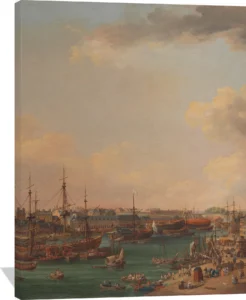
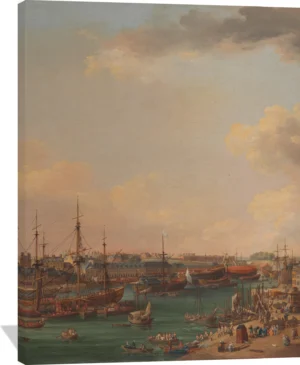
Van Blarenberghe was known for his exacting draftsmanship and refined sense of detail. Working primarily in gouache and watercolor, he created intimate yet richly descriptive scenes that conveyed both visual accuracy and atmospheric charm. His technique favored delicate brushwork, luminous color, and a careful orchestration of spatial depth, hallmarks of the family’s distinctive aesthetic. His commitment to observational fidelity made his works valuable records of their time.
Subjects and Themes
He specialized in topographical landscapes, courtly events, and military subjects, often portraying camps, maneuvers, or ceremonial gatherings with remarkable clarity. These scenes functioned not only as artistic achievements but also as historical documents, capturing the daily rhythms and grand spectacles of late eighteenth- and early nineteenth‑century France. His compositions frequently included finely rendered architecture, animated figures, and thoughtful atmospheric effects that brought each setting to life.
Legacy and Significance
Henri Joseph van Blarenberghe’s work represents the culmination of a family tradition that played an important role in the development of European miniature painting. His ability to merge aesthetic refinement with precise documentation made him a trusted visual chronicler during a period of political and social transformation. Today, his paintings are admired for their understated sophistication and their enduring contribution to the history of topographical and narrative art, embodying the elegance and craftsmanship that define the Van Blarenberghe legacy.