Artistic Style
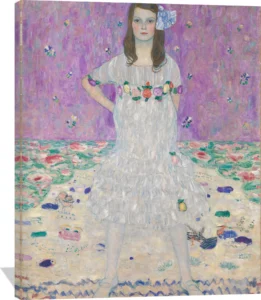
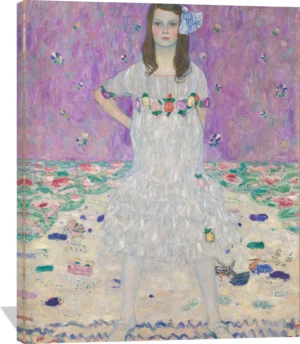
Klimt’s mature style is defined by luminous gold leaf, intricate patterning, and richly decorative surfaces. His work merges Symbolism with a highly personal visual language, creating compositions that feel both intimate and monumental. The use of gold, inspired in part by Byzantine mosaics, lends many of his pieces a radiant, timeless quality that remains instantly recognizable.
Subjects and Themes
Best known for his evocative portrayals of women, Klimt explored themes of love, desire, and the human psyche. His portraits and allegorical works often feature figures enveloped in elaborate motifs, balancing psychological nuance with ornamental splendor. Nature also plays a key role in his landscapes, which reveal a more meditative, mosaic‑like approach to form and color.
Notable Contributions
A founding member of the Vienna Secession, Klimt championed artistic freedom and the break from academic traditions. His bold experimentation helped shape modernism in Central Europe, influencing generations of artists. Masterpieces such as The Kiss and Portrait of Adele Bloch‑Bauer I exemplify his ability to unite emotional resonance with striking visual richness, securing his place as a central figure in early twentieth‑century art.
Cultural Significance
Klimt’s legacy endures in his celebration of beauty, sensuality, and the expressive potential of ornament. His works bridge the decorative and the profound, offering a uniquely immersive visual experience. Today, his paintings remain among the most admired and culturally significant achievements of the European avant‑garde, celebrated for their luxurious detail and their embodiment of a transformative moment in modern art.