Artistic Style
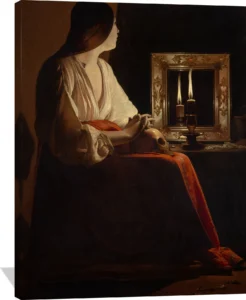
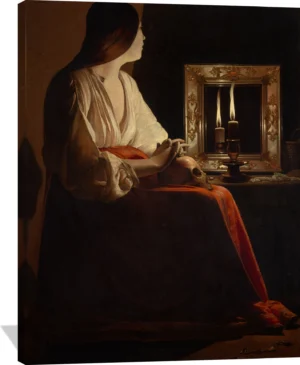
La Tour is best known for his refined use of chiaroscuro, often bathing his subjects in the gentle glow of a single flame. This approach gives his paintings a signature atmosphere of calm intensity. His restrained palette, geometric simplification of forms, and meticulously balanced compositions contribute to a visual language that feels both intimate and timeless.
Subjects and Themes
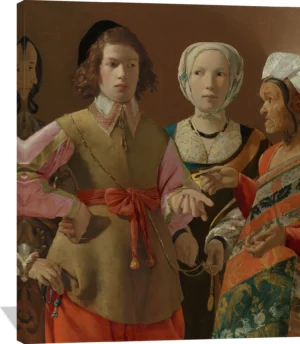
His oeuvre centers on scenes of devotion, contemplation, and domestic life. Figures appear absorbed in thought, their expressions illuminated with subtle dignity. Whether depicting a meditative saint or a humble street musician, La Tour infused every subject with a quiet gravity that heightens emotional resonance. Works such as Magdalene with the Smoking Flame and The Fortune Teller exemplify his ability to transform simple narratives into moments of profound reflection.
Legacy and Significance
Though overlooked for centuries after his death, La Tour is now recognized as a singular voice within seventeenth‑century French painting. His disciplined compositions and contemplative mood set him apart from his contemporaries, aligning him with the broader European Baroque movement while maintaining a distinct identity. Today, he is celebrated for his masterful command of light and his ability to evoke emotion through restraint rather than embellishment.
Georges de La Tour’s paintings continue to captivate viewers with their serene drama, offering a quiet yet powerful presence that resonates across time.