Artistic Style
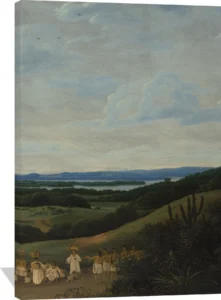
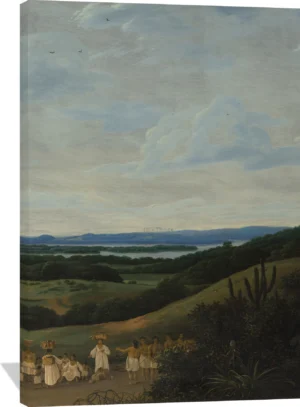
Post’s style blends Dutch Golden Age naturalism with the atmospheric light and expansive horizons of the tropics. His paintings are known for calm compositions, finely observed details, and a measured, almost meditative sense of order. While rooted in the landscape tradition of Haarlem, his work is marked by a unique interplay of European technique and Brazilian subject matter, making him a singular figure in seventeenth-century art.
Subjects and Themes
During his years in Brazil under the patronage of Johan Maurits of Nassau-Siegen, Post recorded views of plantations, coastal settlements, and fortress towns. These scenes often feature palm trees, exotic vegetation, and wide skies rendered with subtle tonal shifts. Human figures, including Indigenous and African subjects, appear as part of the broader environment, contributing to a vivid sense of place without overshadowing the landscape itself.
Legacy and Significance
Frans Post holds a crucial place in art history as the first European landscape painter to create sustained, on-site portrayals of the Americas. His images offered seventeenth-century viewers a rare visual window into Brazil and helped shape Western perceptions of the region. Today, his paintings are valued not only for their aesthetic beauty but also for their historical resonance, preserving glimpses of a colonial world that was rapidly transforming.
Post’s work endures for its serene compositions, luminous surfaces, and remarkably early engagement with cross-cultural subject matter, qualities that continue to captivate collectors and institutions around the world.