Artistic Style
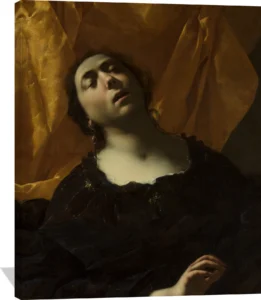
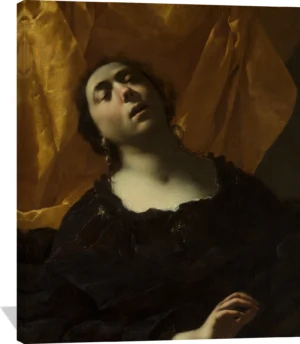
Cairo is celebrated for a vivid Baroque sensibility that merges emotional depth with refined elegance. His paintings often feature luminous color contrasts, fluid contours, and psychologically charged expressions. Cairo’s mastery of chiaroscuro lends his figures a haunting immediacy, while his preference for rich fabrics and jewel‑toned palettes gives his compositions a distinctive vibrancy. His work combines spiritual fervor with theatrical sophistication, making him one of the era’s most recognizable Milanese voices.
Subjects and Themes
Best known for his religious imagery, Cairo frequently depicted saints, martyrs, and deeply moving devotional scenes. He excelled in conveying heightened emotion, whether capturing the ecstatic vision of a saint or the tender gravity of sacred narratives. Many of his figures display an elegant elongation and a captivating inward intensity, hallmarks that set his work apart from his contemporaries.
Notable Contributions
Cairo’s ability to synthesize Lombard naturalism with the dramatic flair of the broader Italian Baroque made him a sought‑after painter for churches and noble patrons. His portraits reveal an equally skilled hand, blending realism with a subtle theatricality. Works such as his depictions of saintly ecstasy and penitence, including pieces like Ecstasy of Saint Teresa and Saint Mary Magdalene (titles referenced for style), demonstrate his remarkable sensitivity to expression and mood.
Cultural Significance
As a prominent figure in seventeenth‑century Milan, Cairo contributed significantly to the development of a regional Baroque identity distinguished by dramatic lighting, refined emotion, and a strong spiritual dimension. His paintings exemplify the period’s search for immediacy and devotion, offering viewers an engaging blend of theatrical beauty and contemplative depth. Today, he is regarded as a key voice in Northern Italian Baroque painting and a master of emotionally resonant sacred art.