Artistic Style
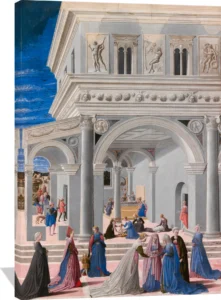
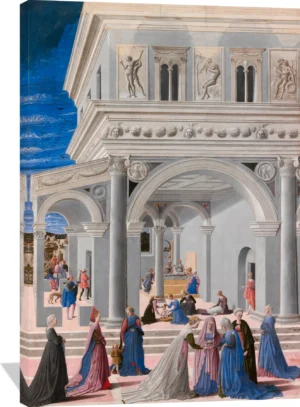
Fra Carnevale’s paintings are distinguished by their meticulous spatial construction and sophisticated use of linear perspective. His compositions often reveal a deep engagement with architectural theory, incorporating classical columns, vaulted interiors, and geometric harmony. This rare combination of painterly sensitivity and architectural discipline produces works of striking order and contemplative beauty.
Subjects and Contributions
Although only a small number of works can be securely attributed to him, Fra Carnevale is best known for religious scenes that merge sacred narratives with monumental architectural settings. Paintings such as the panels associated with the celebrated Barberini Altarpiece demonstrate his interest in integrating human figures within carefully orchestrated environments that feel both solemn and grand. His attention to facial expressions, gesture, and light lends emotional nuance to scenes that might otherwise appear purely formal.
Cultural and Historical Significance
Working in the culturally vibrant court of Urbino, Fra Carnevale contributed to an artistic climate that helped shape the course of Renaissance art. His engagement with perspective and architectural design reflects the intellectual spirit championed by Duke Federico da Montefeltro’s circle, where the ideals of order, balance, and classical revival thrived. Though not as widely known as some contemporaries, he remains a figure of enduring interest for his fusion of spiritual storytelling with the clarity and measured restraint of early Renaissance innovation.
Fra Carnevale’s legacy endures in the quiet sophistication of his paintings, where narrative devotion meets the precision of a master craftsman. His work embodies the disciplined elegance of early Italian Renaissance art, a testament to the era’s pursuit of harmony, proportion, and refined architectural vision.