Artistic Style
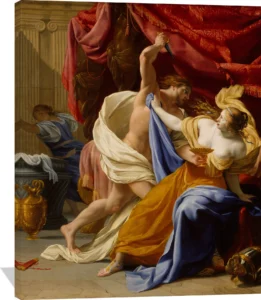
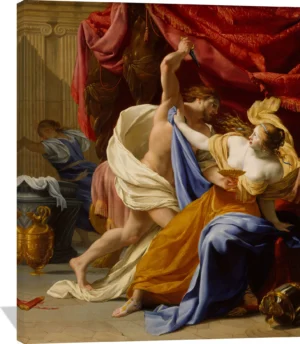
Le Sueur’s work is defined by its clarity, balance, and purity of line. Favoring gentle tonal transitions and restrained compositions, he brought a contemplative calm to scenes that might otherwise be dramatic or ornate. His refined classicism, rooted in both Italian Renaissance ideals and emerging French academic principles, contributed significantly to shaping the visual language of the early French Academy.
Subjects and Themes
A prolific creator of religious narratives, allegories, and mythological scenes, Le Sueur often emphasized emotional intimacy over spectacle. His celebrated cycle depicting the life of Saint Bruno exemplifies his ability to imbue sacred themes with quiet spirituality and disciplined elegance. Even in secular works, such as his interpretations of ancient mythology or historical episodes, his focus remained on clarity of expression and harmonious design.
Legacy and Significance
As a co‑founder of the Académie Royale de Peinture et de Sculpture, Le Sueur played a crucial role in establishing the artistic standards and intellectual foundations that would define French painting for generations. His work stands out for its synthesis of spiritual depth and classical refinement, qualities that continue to resonate with collectors and admirers of French Baroque art. For those drawn to serene compositions and a disciplined yet poetic sensibility, Eustache Le Sueur’s paintings offer a compelling window into the evolution of French classicism and the ideals of the early Academy.