Artistic Style
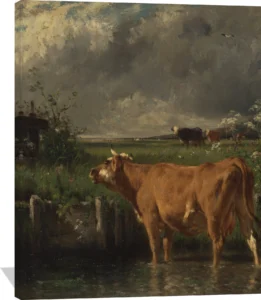
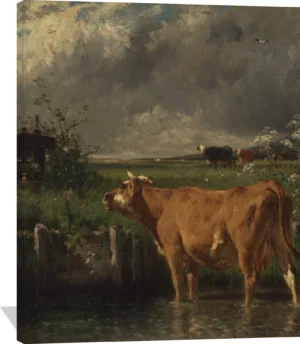
Van Marcke’s work is rooted in the naturalist tradition, characterized by nuanced tonal harmonies and a calm, observational quality. His paintings often feature expansive skies, softly shifting weather, and serene, luminous fields. A gifted technician, he blended careful draftsmanship with expressive brushwork, creating scenes that balance realism with a sense of quiet majesty.
Signature Subjects
The artist was best known for his portrayals of cattle and pastoral settings, subjects he approached with both accuracy and affection. His animals are rendered with anatomical precision yet imbued with personality, becoming central figures within the landscape rather than mere accessories. In works such as The Approach of a Storm and other celebrated pastoral compositions, van Marcke conveyed the symbiotic relationship between animals, land, and atmospheric change.
Legacy and Significance
Van Marcke’s paintings resonated widely during his lifetime, earning him esteem among collectors and critics for his ability to capture the tranquil dignity of rural existence. His contributions enriched the visual record of 19th‑century French countryside life and elevated pastoral subjects through a uniquely expressive sensibility. Today, his work remains valued for its refined naturalism and its ability to evoke the beauty and harmony of nature with enduring authenticity.