Artistic Style
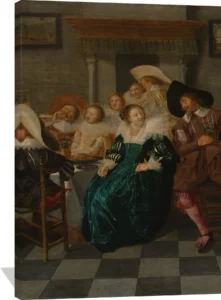
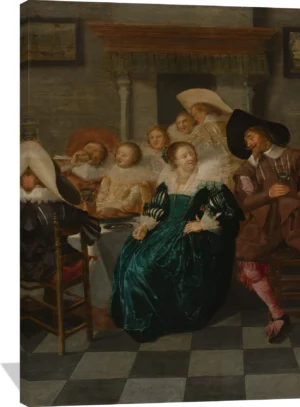
Hals specialized in the elegant genre scene, capturing moments of festivity, music-making, and courtly interaction with clarity and charm. His compositions are marked by balanced arrangements, crisp outlines, and a bright, harmonious palette. He developed a succinct, polished brushwork that gave his scenes a sense of immediacy and poise, distinguishing his approach from the broader, more painterly manner of his elder brother, Frans Hals.
Subjects and Themes
Dirck Hals’s work often portrays finely dressed figures engaged in polite amusement dancing, conversing, or enjoying music within intimate interiors or serene garden settings. These images not only reflect the pleasures of Dutch Golden Age society but also offer subtle commentaries on decorum, flirtation, and social ritual. Paintings such as Company at Table or Garden Party exemplify his ability to evoke atmosphere through gesture, costume, and carefully arranged space.
Legacy and Significance
Hals played a significant role in shaping the courtly genre scene in the Netherlands, influencing contemporaries and setting a precedent for later seventeenth‑century painters who embraced similar themes. His work remains admired for its blend of elegance, intimacy, and technical finesse. As one of Haarlem’s notable contributors to Dutch Golden Age art, he is recognized for his distinctive vision of social refinement and his contribution to the enduring allure of the genre tradition.