Artistic Style and Technique
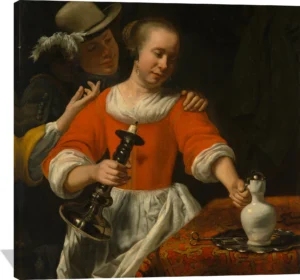
Bisschop was celebrated for his masterful trompe‑l’oeil effects, creating painted surfaces and objects that appear convincingly three‑dimensional. His technique balanced precision with warmth, blending meticulous detail with a subtle atmospheric quality. This command of realism, often used in his illusionistic door paintings, set him apart from many contemporaries and positioned him as a pioneer within the genre.
Notable Subjects
His work often portrayed intimate interior scenes, lively genre moments, and character studies featuring figures such as maids, children, and musicians. Bisschop also produced elegant portraits and expressive tronies, capturing the psychological nuance and individuality of his sitters. His painted children, rendered with sensitivity and charm, remain among his most admired contributions.
Cultural and Historical Significance
Active during a flourishing period of Dutch art, Bisschop contributed to the cultural richness of Dordrecht, where he spent his entire life. He influenced a generation of local artists through both his innovative approaches to illusionism and the refined narrative qualities of his genre paintings. His works exemplify the domestic comfort, craftsmanship, and visual wit characteristic of the era’s artistic output.
Distinctive Legacy
Bisschop’s legacy lies in his ability to transform everyday subjects into scenes of depth and elegance. His refined realism, inventive compositions, and atmospheric charm continue to make his paintings highly appealing to collectors and admirers of the Dutch Golden Age.