Artistic Style
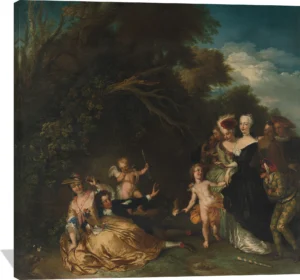
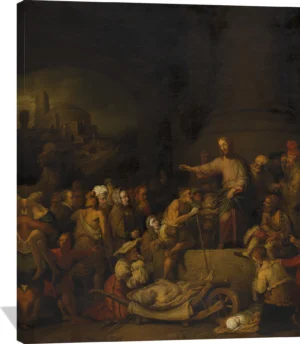
Dietrich’s work is distinguished by a refined technique that blends Baroque richness with early Rococo elegance. His extraordinary skill in imitation allowed him to channel the visual languages of Rembrandt, Salvator Rosa, and various Dutch and Italian schools, yet his compositions reveal a personal sensitivity to atmosphere and detail. His mastery of light, texture, and narrative nuance made him a sought-after court painter and a respected figure in European art circles.
Subjects and Themes
Dietrich produced an expansive body of work that includes landscapes, pastoral scenes, religious narratives, genre subjects, and historical allegories. He excelled particularly in intimate rustic scenes and dramatic chiaroscuro compositions. Whether depicting tranquil countryside vistas or richly shadowed interiors, he infused his subjects with subtle emotion and polished draftsmanship.
Legacy and Significance
As a professor at the Dresden Academy and inspector of the Royal Gallery, Dietrich played a meaningful role in shaping artistic education in Saxony. His paintings and engravings embody a bridge between the grand traditions of the 17th century and the evolving tastes of the 18th. Today, collectors value his work for its technical refinement, stylistic versatility, and the distinctive mastery that made him one of Germany’s most accomplished artists of his era.