Artistic Style
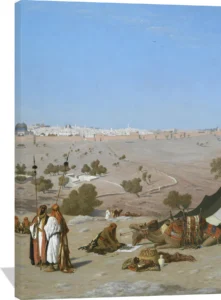
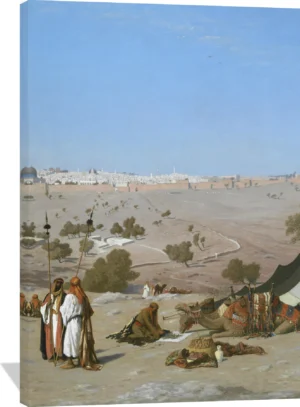
Frère’s work is distinguished by luminous color, fine detail, and an evocative handling of light. His paintings often convey a serene yet dramatic atmosphere, capturing the heat, brilliance, and texture of desert landscapes and bustling urban scenes. Through careful rendering and a keen eye for architectural nuance, he created immersive compositions that reveal his deep engagement with the regions he depicted.
Notable Subjects
Traveling extensively through Egypt, Syria, and Turkey, Frère developed a lasting fascination with daily life in these locales. He painted sunlit bazaars, caravan routes, desert vistas, and scenes along the Nile, frequently populating them with figures whose gestures and attire convey a sense of authenticity. Works such as Street Scene in Cairo and Caravan in the Desert exemplify his ability to blend documentary clarity with artistic sensitivity.
Cultural Significance
As a prominent contributor to 19th-century Orientalism, Frère played a significant role in shaping European perceptions of the Middle East. While his paintings catered to the period’s fascination with distant cultures, they also reflected firsthand experience rather than pure imagination. His refined technique and atmospheric precision made him a sought-after artist among collectors and an influential figure in the development of travel-inspired painting.
Legacy
Charles-Théodore Frère’s work endures for its distinctive blend of realism and poetry, its vibrant depictions of light, and its immersive portrayal of cultures that captivated the European artistic imagination. Today, his scenes remain valued for their craftsmanship and for the window they offer into 19th‑century encounters between Europe and the Middle East.