Artistic Style
Ulrich’s work is distinguished by finely rendered detail, a restrained palette, and an intimate observational quality. His paintings often reveal a quiet, contemplative atmosphere, reflecting influences from both German academic naturalism and the American realist movement. His commitment to truthful representation gives even the simplest scenes a compelling sense of humanity.
Subjects and Themes
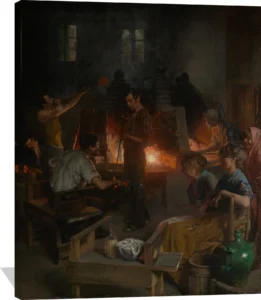
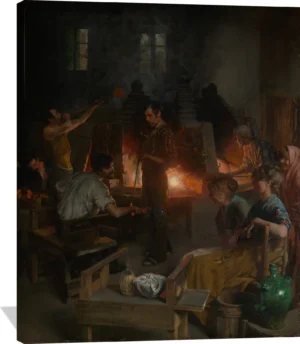
He frequently portrayed artisans, workers, and the rhythms of domestic life, presenting moments that feel both ordinary and profound. Ulrich’s scenes of studios, workshops, and interiors demonstrate his mastery of texture and light, while his portrayals of immigrant communities highlight the social dynamics of his era. Works such as Glass Blowers and Waifs in an Orphanage reveal his interest in labor, childhood, and the quiet dignity of everyday environments.
Cultural Significance
Ulrich played a notable role in the international exchange between American and European art at the turn of the century. As a member of the Munich-based circle of expatriate American painters, he helped introduce a refined approach to genre painting back to audiences in the United States. His ability to merge European technical discipline with American social subjects made him an important figure in late nineteenth-century realism.
Legacy
Though his career was cut short, Ulrich left behind a body of work admired for its craftsmanship and authenticity. His paintings continue to resonate for their quiet emotional depth and their ability to illuminate the subtleties of daily life through careful observation and masterful realism.