Artistic Vision and Style
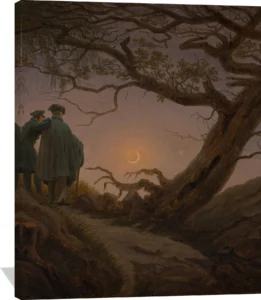
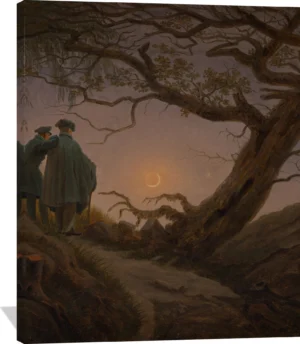
Friedrich’s style is distinguished by its meditative atmosphere, precise draftsmanship, and evocative use of light. His compositions often position the viewer at the threshold of vast natural spaces, creating a contemplative dialogue between humanity and the sublime. Through measured detail and poetic restraint, he elevated landscape from mere scenery to a profound vehicle for introspection and spiritual reflection.
Signature Subjects
Typical themes in Friedrich’s oeuvre include mist-shrouded mountains, moonlit vistas, ancient ruins, windswept trees, and solitary figures seen from behind. These Rückenfiguren guide the viewer inward, emphasizing the emotional resonance of nature rather than narrative action. Works such as Wanderer Above the Sea of Fog and The Monk by the Sea exemplify his ability to capture both the fragility and transcendence of the human experience.
Legacy and Cultural Impact
Friedrich’s focus on mood, symbolism, and the spiritual dimension of the natural world helped shape the visual language of Romanticism. His approach influenced generations of artists, from 19th‑century landscape painters to modern and contemporary creators drawn to themes of solitude, awe, and the sublime. Today, he is recognized as a pioneer who redefined the landscape as a setting not only for observation but for profound emotional encounter.
Across his career, Friedrich developed a body of work that remains celebrated for its quiet intensity and its ability to merge the physical world with the inner life. His paintings continue to captivate collectors and admirers seeking art that evokes wonder, contemplation, and a sense of the eternal.