Artistic Style
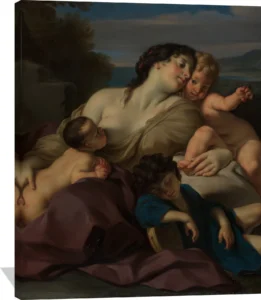
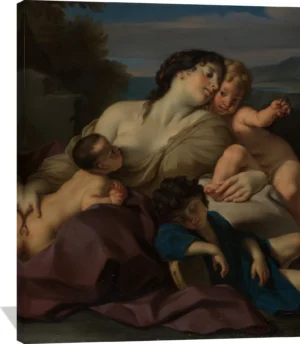
Cignani’s work is distinguished by its luminous color, graceful compositions, and tender modeling of the human form. His figures often possess a serene, idealized beauty, rendered with subtle tonal transitions that became a hallmark of his mature style. His approach reflects a deep study of Renaissance masters while embracing a more intimate emotional expression characteristic of the Baroque.
Notable Themes and Subjects
Devotional imagery, mythological scenes, and allegorical narratives dominated Cignani’s oeuvre. He excelled in portraying the Virgin and Child, soft celestial atmospheres, and the gentle interplay of divine and earthly realms. Even in mythological subjects such as The Education of Cupid or The Rape of Europa, his treatment emphasized poetic clarity over dramatic excess, lending his works a distinctive contemplative calm.
Contributions and Legacy
Cignani founded the Accademia del Nudo in Bologna and later directed the Accademia Clementina, shaping a new generation of artists and reinforcing the importance of rigorous anatomical study. His influence extended across Emilia-Romagna, where his frescoes and altarpieces set new standards for refinement and expressive subtlety. Works such as the celebrated dome fresco of the Assumption in Forlì illustrate his mastery of illusionistic composition and his ability to fuse monumental structure with gentle emotional resonance.
Cultural Significance
As a pivotal figure in the transition from Baroque dynamism to the more measured grace of the early eighteenth century, Cignani holds a central place in Bolognese artistic heritage. His paintings continue to be admired for their purity of form, balanced compositions, and ability to evoke an atmosphere of serene devotion. Collectors and admirers value his art for its poetic refinement and its enduring contribution to the evolution of Italian painting.