Artistic Style
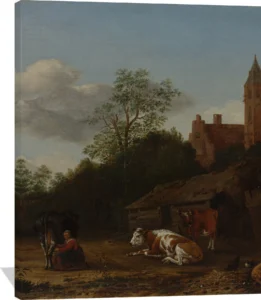
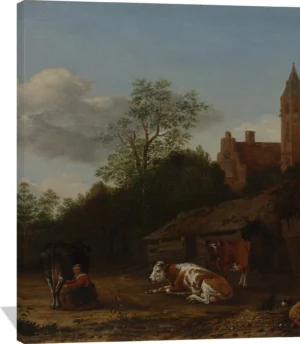
Van Borssom’s work is distinguished by its calm tonal harmony and nuanced rendering of light. His compositions often feature expansive skies, soft transitions between foreground and distance, and a delicate interplay between shadow and illumination. These qualities align him with the broader Dutch landscape tradition while revealing his own subtle poetic vision.
Subjects and Themes
He is best known for tranquil countryside scenes, wooded paths, riverside vistas, and carefully observed studies of animals, particularly birds. His drawings and paintings capture the understated beauty of the Dutch environment, emphasizing mood over dramatic action. Works such as his depictions of rural estates and serene water views reflect his consistent interest in nature’s quiet rhythms.
Legacy and Significance
Although not as widely recognized as some of his contemporaries, Van Borssom’s oeuvre contributes meaningfully to the richness of 17th‑century Dutch landscape painting. His work offers insight into the period’s evolving appreciation for everyday scenery and the intimate connection between artist and environment. Today, he is valued for his finely balanced compositions and the enduring serenity that defines his art, a quality that continues to resonate with collectors and admirers of the Dutch Golden Age.