Artistic Style
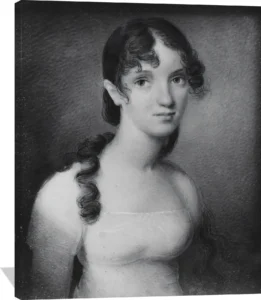
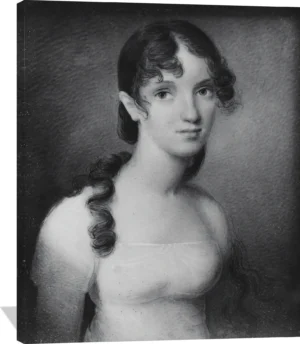
Dickinson’s work is distinguished by its delicate brushwork, luminous color, and remarkable precision. His miniatures typically feature softly modeled flesh tones, finely rendered hair, and clear, uncluttered compositions that place full attention on the sitter’s presence. He favored transparent watercolor on ivory, a medium through which he achieved subtle gradations of light and a refined, polished finish.
Subjects and Approach
Best known for his portraits of prominent American figures, Dickinson captured merchants, politicians, military officers, and influential families across the eastern states. His sitters are often shown in three-quarter view against lightly tinted backgrounds, a format that allowed him to balance realism with elegance. The result is a body of work that conveys both likeness and an intimate psychological depth.
Legacy and Significance
Dickinson was widely recognized in his lifetime and traveled extensively to meet the demand for his portraits. His practice helped solidify miniature painting as a respected art form in the United States during the early nineteenth century. Though later eclipsed by the rise of photography, his miniatures remain valued for their craftsmanship and historical insight. Collectors and scholars regard his work as a window into early American identity, marked by refinement, personal expression, and a distinctive artistic voice.