Artistic Style
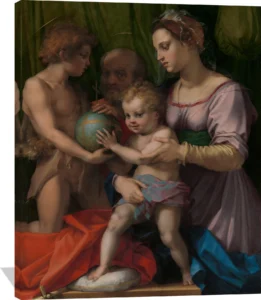
Del Sarto’s paintings are known for their remarkable softness and unity, achieved through his masterful sfumato and a nuanced understanding of light. His figures possess a serene dignity, rendered with meticulous attention to anatomy and drapery. Often described as a “faultless painter,” he brought together the structural clarity of Florentine design with a rich, painterly surface that influenced later Mannerist artists.
Subjects and Themes
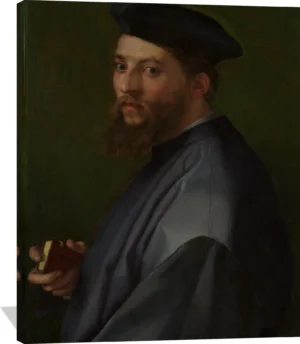
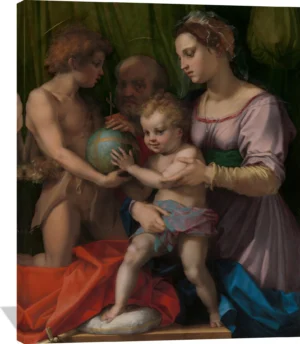
His work primarily centers on religious narratives, devotional imagery, and portraits. Scenes such as the Holy Family, saints, and altarpiece commissions reveal his ability to infuse familiar subjects with warmth and humanity. His portraits, though fewer in number, exhibit a remarkable psychological depth and restraint, underscoring his keen sensitivity to character.
Legacy and Significance
Born and active in Florence from 1486 to 1530, Andrea del Sarto played a pivotal role in shaping the transition between the High Renaissance and emerging Mannerist aesthetics. His workshop trained influential painters such as Rosso Fiorentino and Jacopo Pontormo, extending his impact across generations. Revered for his technical mastery and compositional harmony, he remains a central figure in Renaissance art, admired for the quiet power and refined elegance that define his oeuvre.