Artistic Style
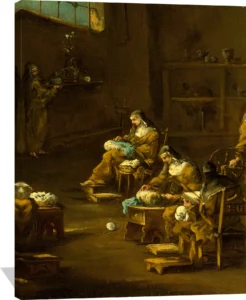
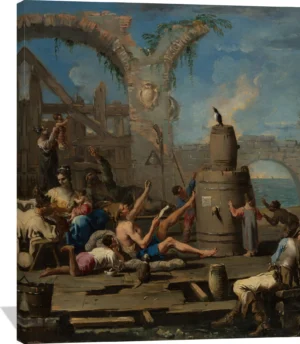
Magnasco developed a highly personal style characterized by rapid, flickering strokes, muted tonalities, and an almost spectral sense of movement. While rooted in the Baroque tradition, his aesthetic pushed beyond conventional grandeur, favoring instead a moody, introspective energy. This approach gives many of his compositions an otherworldly quality that later scholars have noted as remarkably modern.
Subjects and Themes
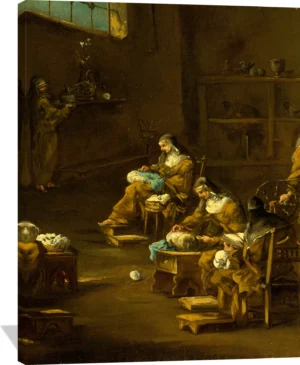
His paintings often depict monastic interiors, hermits, bandits, soldiers, and gatherings of marginalized or contemplative figures. Rather than idealizing these scenes, Magnasco infused them with a powerful sense of human drama. Landscapes and architectural settings become expressive frameworks, heightening psychological tension and guiding the viewer through shadow-filled spaces. When he turned to religious themes, he emphasized spiritual fervor and emotional immediacy over strict narrative clarity.
Contributions and Significance
Magnasco’s work stands out for its ability to convey atmosphere with remarkable economy. His light-drenched yet somber settings helped shape evolving tastes in eighteenth-century Italian painting, and his bold handling of paint earned him recognition among contemporaries in Milan and Florence. Later generations admired his singular approach, citing him as an early precursor to more expressive movements. His distinctive vision, rooted in the Baroque yet pushing its boundaries, continues to captivate collectors and historians.
Why His Work Endures
Magnasco’s paintings offer a compelling blend of drama, mystery, and emotional depth. The intensity of his figures, his masterful control of shadow, and his ability to evoke atmosphere make his work especially appealing to admirers of evocative and expressively charged imagery. Whether portraying monastic solitude, turbulent gatherings, or hauntingly lit interiors, his art reveals a world where gesture, light, and emotion converge with singular force.