Artistic Style and Technique
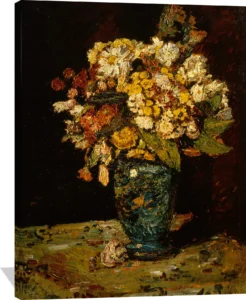
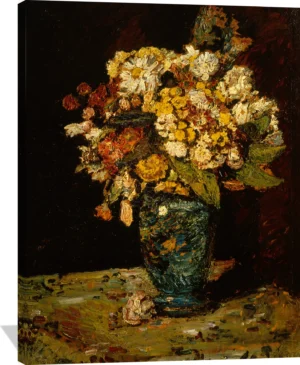
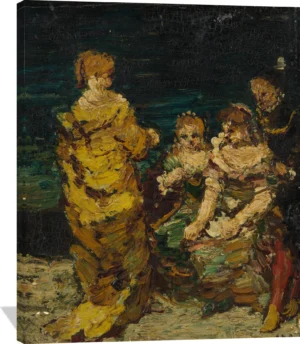
Monticelli developed a distinctive, highly tactile approach to painting, applying thick layers of pigment to create shimmering, expressive compositions. His palette favored deep golds, saturated reds, and jewel-like tones, producing scenes that feel both opulent and dreamlike. This bold handling of paint, combined with a refined sense of color, marked him as a pioneer of a more modern, emotionally charged visual language.
Subjects and Themes
He frequently depicted romanticized fêtes, intimate garden gatherings, floral arrangements, and atmospheric landscapes. Rather than pursuing strict realism, Monticelli emphasized mood and visual richness, transforming familiar subjects into poetic, almost theatrical visions. His figures often appear enveloped in glowing light, their forms softened by the luxuriant textures of his brushwork.
Legacy and Significance
Though his work was underappreciated in his lifetime, Monticelli’s daring color and technique later earned him recognition as a vital link between mid‑19th‑century Romanticism and the innovations that shaped modern art. Today, he is admired for his distinctive impasto style and his masterful command of color, qualities that give his paintings an enduring sense of vitality and enchantment.