Artistic Style
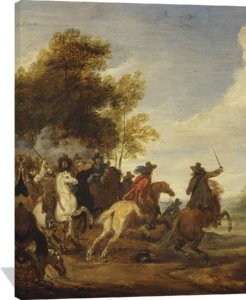
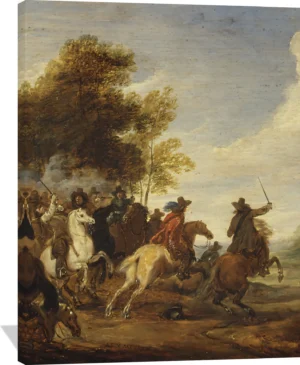
Van der Meulen’s work blends Flemish precision with the emerging grandeur of French Baroque. His paintings are distinguished by crisp detail, carefully observed landscapes, and balanced compositions that convey both the drama of conflict and the elegance of courtly power. His subtle color harmonies and controlled atmospheric effects gave his large-scale scenes a sense of immediacy and authority.
Notable Contributions
He played a central role in shaping the visual legacy of the reign of Louis XIV, serving within the royal manufactory and accompanying the king on military campaigns to document events firsthand. His paintings and designs became essential reference points for the tapestry series produced at the Gobelins, helping elevate French decorative arts to new heights. As a result, he stands as a pivotal conduit between Flemish artistic traditions and the developing visual language of the French monarchy.
Subjects and Significance
Van der Meulen specialized in expansive battlefield scenes, ceremonial entries, and meticulously rendered cityscapes, often portraying fortifications, encampments, and processions. His images provided not only artistic value but also political purpose, reinforcing the authority and military prowess of the French crown. Through his ability to merge documentary accuracy with a polished, courtly sensibility, he set a standard for official military imagery that influenced generations of European painters.
Today, Adam Frans van der Meulen is remembered for his masterful command of detail and his influential role in crafting the visual identity of Louis XIV’s France. His works remain admired for their clarity, elegance, and enduring historical resonance.