Artistic Style
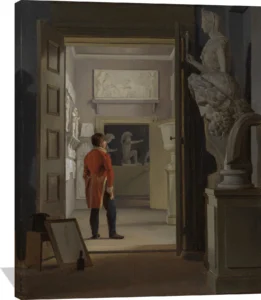
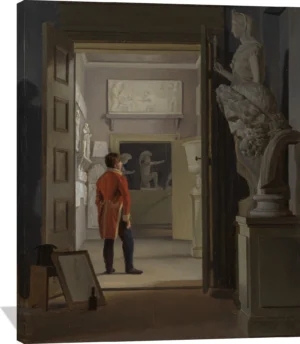
Müller’s work is distinguished by its harmonious balance between classical composition and the emerging Romantic spirit of early nineteenth-century Denmark. His paintings often feature carefully modeled figures, precise contours, and a restrained palette that enhances emotional resonance. This blend of clarity and poetic depth became his signature, making his work recognizable within the broader movement of Danish academic painting.
Subjects and Themes
Though he died at a young age, Müller produced a remarkable body of history and religious works. He frequently depicted scenes from the Bible, medieval lore, and northern European cultural heritage. His narrative approach emphasized human emotion and moral tension, giving his compositions an intimate immediacy. Works such as The Death of Saint Canute demonstrate his ability to convey solemn drama with both dignity and subtlety.
Legacy and Significance
Müller contributed meaningfully to the intellectual and artistic identity of the Danish Golden Age. His commitment to elevating national and spiritual subjects aligned him with contemporaries who sought to define a distinctly Danish visual culture. Although his career was brief, his paintings remain valued for their craftsmanship, contemplative tone, and the way they embody the refined yet quietly expressive qualities of the era. Today, collectors and admirers appreciate his work for its timeless restraint and its role within the evolution of nineteenth-century Scandinavian art.