Artistic Style and Approach
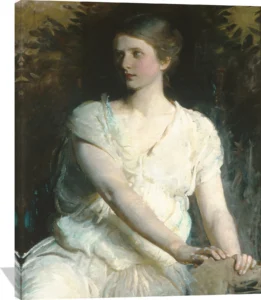
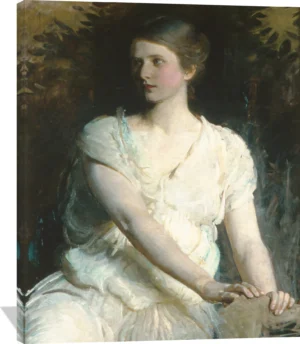
Thayer’s style combined refined academic technique with a soft, atmospheric quality that gave his compositions an otherworldly presence. His mastery of light and delicate tonal transitions produced a distinctive radiance, often associated with the idealized beauty of his subjects. His paintings frequently carried symbolic undertones, revealing his belief in art’s power to convey moral and emotional depth.
Signature Subjects
Although he painted landscapes and wildlife, Thayer is most celebrated for his serene depictions of women and children, often presented with angelic attributes. These works, including his celebrated series of winged figures, explore themes of purity, protection, and transcendence. Thayer’s devotion to the natural world also informed his studies of animals and camouflage, which would later hold scientific significance.
Cultural and Historical Significance
Beyond his artistic achievements, Thayer played a pivotal role in early camouflage theory, co-developing concepts rooted in natural coloration and concealment. This interdisciplinary curiosity reflects the broader intellectual landscape of his era, in which art and science enriched one another. His paintings, however, remain his most lasting legacy, admired for their introspective grace and luminous beauty.
Today, Abbott H. Thayer is remembered as a visionary figure who united technical excellence with profound emotional resonance, creating works that continue to captivate with their quiet power and spiritual depth.