
The Penitent Magdalen
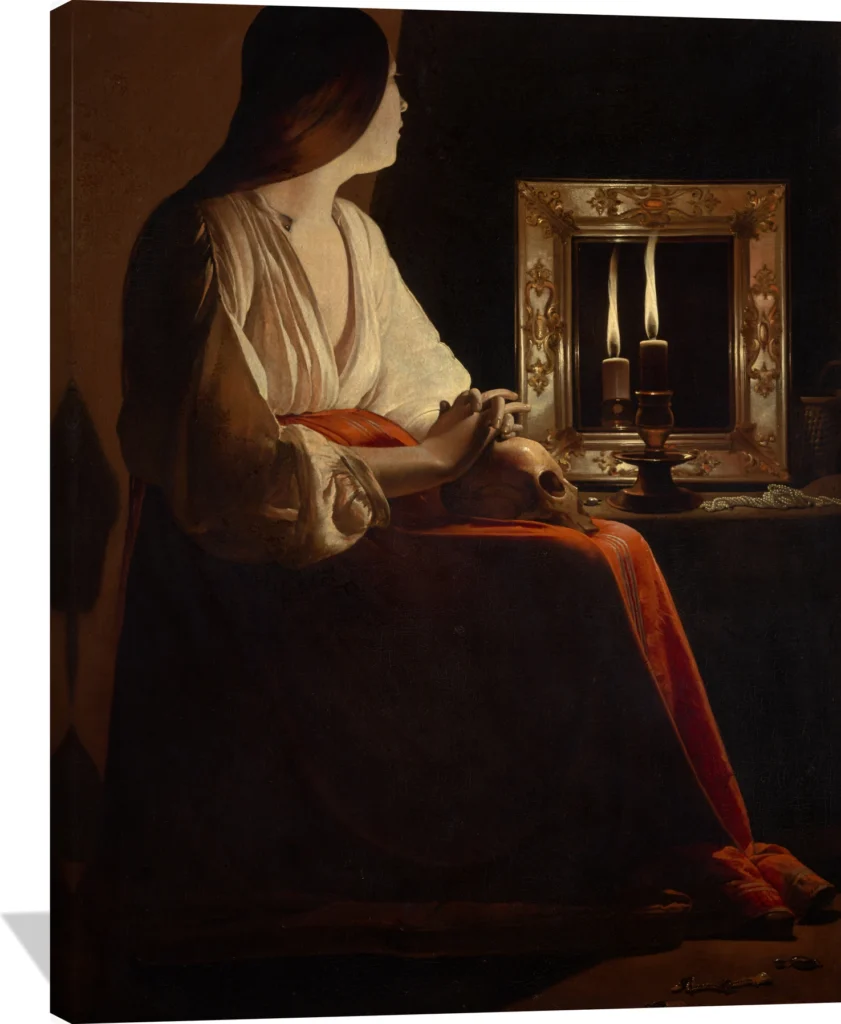
The Georges de La Tour The Penitent Magdalen canvas captures the quiet intensity of spiritual reflection through candlelit chiaroscuro. Warm tones of amber, ivory, and deep umber illuminate the solitary figure, her serene posture bathed in soft, flickering light. The masterful play of shadow and glow evokes a timeless sense of contemplation and grace.
This exquisite wall art brings depth and calm to any interior—perfect for a study, living room, or entryway seeking a touch of classical elegance. A The Penitent Magdalen canvas print infuses your space with the meditative beauty and luminous craftsmanship of one of France’s most poetic painters.
Georges de La Tour (French, Vic-sur-Seille 1593–1652 Lunéville) stands as one of the most evocative painters of the Baroque era, celebrated for his mastery of candlelit scenes and profound sense of stillness. His work bridges the everyday and the spiritual, transforming quiet moments into compositions of striking emotional clarity.
Artistic Style
La Tour is best known for his refined use of chiaroscuro, often bathing his subjects in the gentle glow of a single flame. This approach gives his paintings a signature atmosphere of calm intensity. His restrained palette, geometric simplification of forms, and meticulously balanced compositions contribute to a visual language that feels both intimate and timeless.
Subjects and Themes
His oeuvre centers on scenes of devotion, contemplation, and domestic life. Figures appear absorbed in thought, their expressions illuminated with subtle dignity. Whether depicting a meditative saint or a humble street musician, La Tour infused every subject with a quiet gravity that heightens emotional resonance. Works such as Magdalene with the Smoking Flame and The Fortune Teller exemplify his ability to transform simple narratives into moments of profound reflection.
Legacy and Significance
Though overlooked for centuries after his death, La Tour is now recognized as a singular voice within seventeenth‑century French painting. His disciplined compositions and contemplative mood set him apart from his contemporaries, aligning him with the broader European Baroque movement while maintaining a distinct identity. Today, he is celebrated for his masterful command of light and his ability to evoke emotion through restraint rather than embellishment.
Georges de La Tour’s paintings continue to captivate viewers with their serene drama, offering a quiet yet powerful presence that resonates across time.
Trust & policies
- 🚚 Free tracked shipping to 45+ countries. Local import duties or taxes may apply in some destinations.
- 🎨 Made-to-order, printed close to your delivery location
- 🛡️ If damaged, defective, or misprinted: free replacement or refund
- 🌍 Printed in US/CA/EU/UK/AU based on delivery location
- 💎 Acid-free, fade-resistant canvas with solid wood stretcher bars
- 🖼️ Optional pine floating frames in white, black, or brown
- 🪝 Ready to hang — hardware pre-installed