
Lucas van Uffel (died 1637)
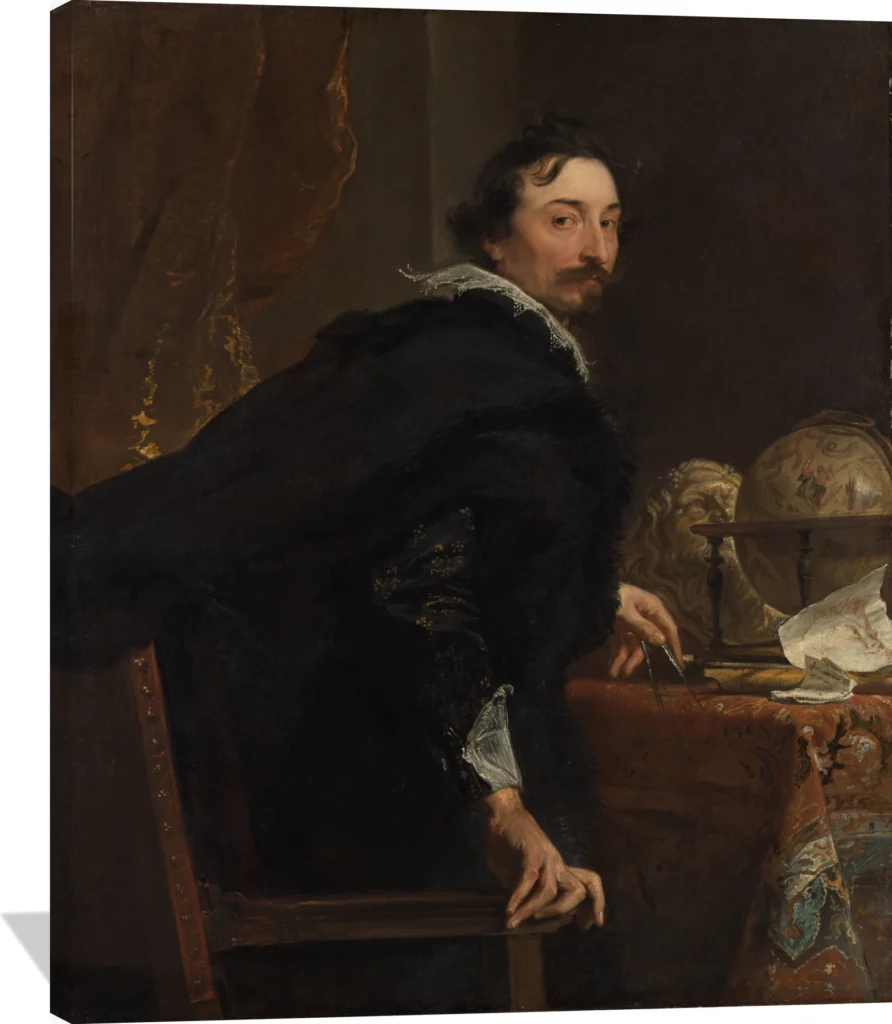
The Anthony van Dyck Lucas van Uffel canvas captures the quiet authority of a 17th‑century gentleman immersed in thought. Rendered in rich tones of deep black, warm gold, russet, and muted cream, this masterful portrait radiates sophistication and introspection. The subtle play of light across fabric and skin highlights Van Dyck’s signature elegance and psychological depth.
This museum‑quality canvas print brings timeless refinement to any interior. Ideal for a study, library, or classic living room, it adds a touch of Old World grandeur while complementing modern décor with its balanced composition and contemplative mood.
Anthony van Dyck was a Flemish painter born in Antwerp in 1599 and active until his death in London in 1641. Celebrated as one of the most influential portraitists of the seventeenth century, he helped shape the visual language of Baroque portraiture across Europe.
Artistic Style
Van Dyck’s work is defined by its refined elegance, expressive naturalism, and masterful handling of color. His portraits blend psychological depth with an effortlessly graceful presentation, making sitters appear both noble and approachable. A subtle, luminous palette and fluid brushwork give his paintings their characteristic sense of poise and vitality.
Typical Subjects
Best known for his portraits of aristocrats, statesmen, and members of royal courts, van Dyck captured the prestige and personality of Europe’s elite. His appointment as principal court painter to Charles I of England led to some of his most iconic works. In addition to portraiture, he produced religious and mythological scenes, though these were secondary to his celebrated likenesses.
Contributions and Significance
Van Dyck transformed English portraiture, setting a new standard for elegance and sophistication that influenced generations of artists. His ability to fuse realism with an elevated sense of presence established a model for court portraiture that shaped European art well beyond his lifetime. His distinctive refinement and nuanced psychological insight remain hallmarks of his legacy.
Trust & policies
- 🚚 Free tracked shipping to 45+ countries. Local import duties or taxes may apply in some destinations.
- 🎨 Made-to-order, printed close to your delivery location
- 🛡️ If damaged, defective, or misprinted: free replacement or refund
- 🌍 Printed in US/CA/EU/UK/AU based on delivery location
- 💎 Acid-free, fade-resistant canvas with solid wood stretcher bars
- 🖼️ Optional pine floating frames in white, black, or brown
- 🪝 Ready to hang — hardware pre-installed