
Thomas Willing
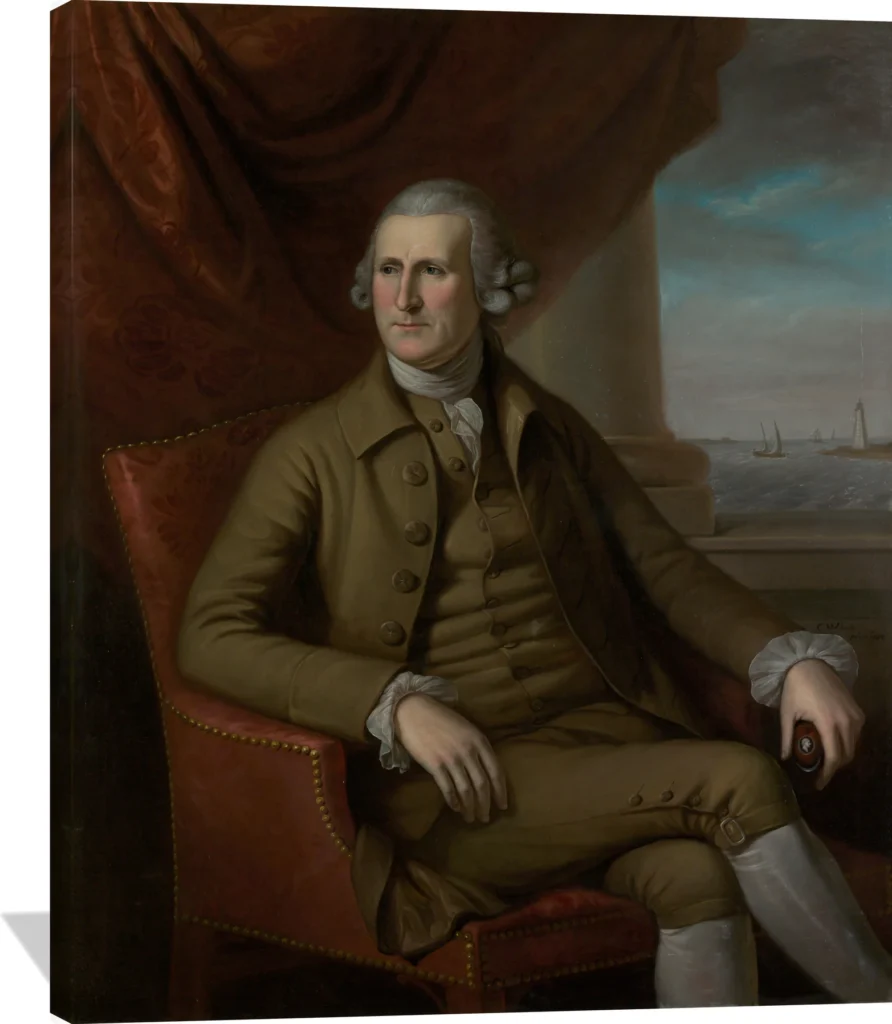
The Charles Willson Peale Thomas Willing canvas captures the quiet authority and refined presence of an 18th-century statesman. Peale’s masterful use of warm browns, deep reds, and soft grays creates a stately composition balanced by the cool blue sky and calm seascape beyond. The sitter’s poised expression and elegant attire evoke dignity and intellect, hallmarks of Peale’s celebrated portrait style.
This timeless canvas print lends sophistication to any interior—ideal for a study, library, or formal living room. With its classic palette and serene mood, the Thomas Willing wall art brings a touch of early American elegance to modern spaces.
Charles Willson Peale (1741–1827) was an American painter, naturalist, and museum founder whose work captured the emerging identity of the new United States. Born in Chester, Maryland, and later based in Philadelphia, he became one of the most influential portraitists of the Revolutionary era.
Artistic Style and Approach
Peale’s portraits are distinguished by their clarity, disciplined draftsmanship, and thoughtful attention to character. His style blended late colonial realism with a restrained neoclassical sensibility, resulting in works that feel both grounded and aspirational. He often depicted sitters with symbolic objects or subtle environmental cues, reflecting his belief in art as a vehicle for civic virtue and personal achievement.
Notable Subjects and Contributions
Peale is best known for his portrayals of leading figures of the American Revolution, including multiple iconic images of George Washington. These portraits helped shape the early visual culture of the nation and remain central to American historical memory. Beyond individual likenesses, Peale created group scenes and innovative compositions such as The Artist in His Museum, which showcased his dual identity as painter and naturalist.
Legacy and Cultural Significance
A pioneering figure, Peale founded one of the first major museums in the United States, where he presented art, scientific specimens, and educational displays to the public. His commitment to learning, experimentation, and accessible culture made him a key contributor to early American intellectual life. Today, his work stands out for its blend of artistry and enlightenment ideals, offering a vivid window into the people and spirit of the new republic.
Trust & policies
- 🚚 Free tracked shipping to 45+ countries. Local import duties or taxes may apply in some destinations.
- 🎨 Made-to-order, printed close to your delivery location
- 🛡️ If damaged, defective, or misprinted: free replacement or refund
- 🌍 Printed in US/CA/EU/UK/AU based on delivery location
- 💎 Acid-free, fade-resistant canvas with solid wood stretcher bars
- 🖼️ Optional pine floating frames in white, black, or brown
- 🪝 Ready to hang — hardware pre-installed