
The Rest on the Flight into Egypt
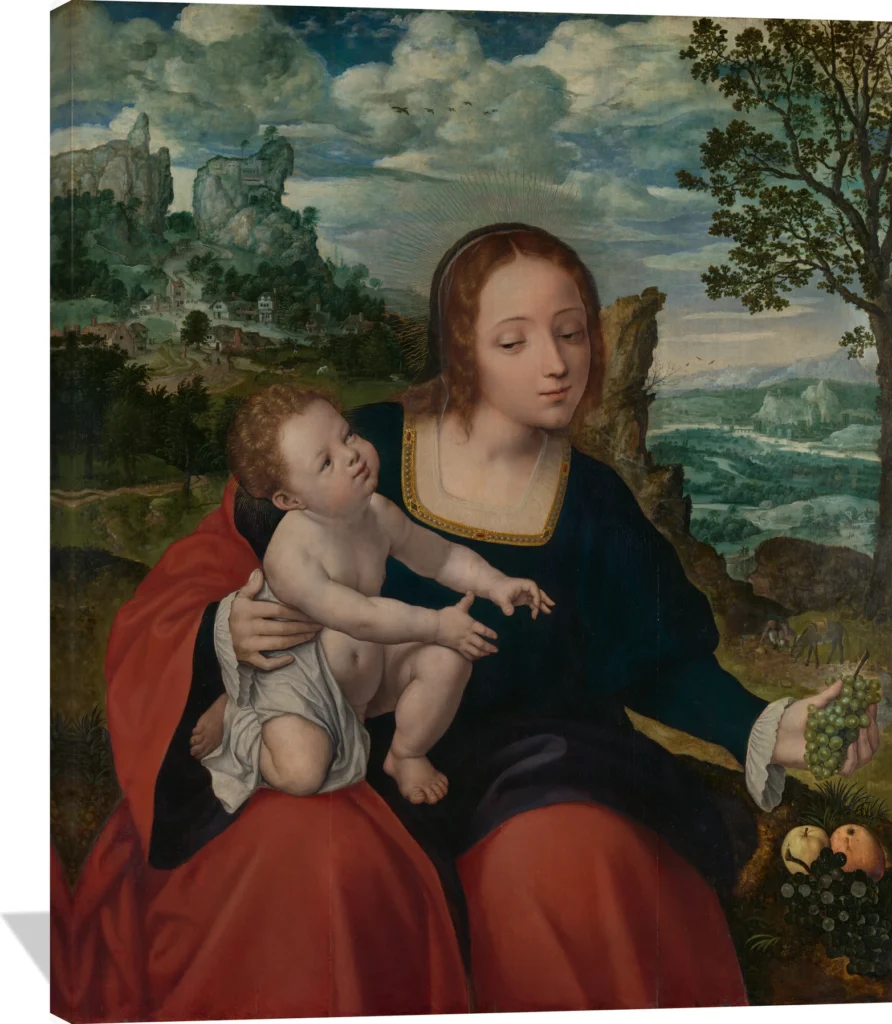
The Jan Massys The Rest on the Flight into Egypt canvas captures a serene moment of maternal grace set against a luminous pastoral landscape. Soft blues, deep greens, and warm earth tones blend harmoniously, highlighting the tender connection between mother and child beneath a radiant sky. The Netherlandish master’s refined detail and balanced composition evoke both intimacy and reverence.
This exquisite The Rest on the Flight into Egypt wall art brings Renaissance elegance to any space. Ideal for a living room, study, or entryway, this canvas print invites quiet reflection and timeless beauty into your home décor.
Jan Massys (ca. 1509–1573) was a prominent Netherlandish painter from Antwerp, celebrated for his refined technique and his ability to merge Northern realism with the elegance of the Italian Renaissance. Building on the legacy of his father, the influential painter Quentin Massys, he developed a distinctive visual language that captured both human emotion and the nuanced beauty of everyday life.
Artistic Style and Approach
Massys is known for his polished draftsmanship, luminous color palette, and a meticulous attention to detail characteristic of the Antwerp school. His work often balances moral or allegorical themes with a sensual elegance, creating compositions that are visually striking yet rich in symbolic meaning. His figures are rendered with expressive subtlety, revealing psychological depth and a graceful naturalism.
Subjects and Themes
He frequently depicted biblical heroines, mythological narratives, and genre scenes featuring courtly or domestic life. Subjects such as Judith, Susanna, and the Liberation of Andromeda allowed him to explore the beauty of the human form while engaging with stories that resonated with contemporary moral concerns. His interest in the female figure became a hallmark of his oeuvre, distinguishing him within the flourishing artistic environment of sixteenth‑century Antwerp.
Legacy and Significance
Jan Massys holds an important place in Northern Renaissance art for his synthesis of local tradition with international influence. His ability to blend Antwerp’s realism with Italianate grace made him a key contributor to the evolving artistic tastes of his era. Today, his works are valued for their refined execution, evocative storytelling, and the distinctive elegance that continues to define his enduring legacy.
Trust & policies
- 🚚 Free tracked shipping to 45+ countries. Local import duties or taxes may apply in some destinations.
- 🎨 Made-to-order, printed close to your delivery location
- 🛡️ If damaged, defective, or misprinted: free replacement or refund
- 🌍 Printed in US/CA/EU/UK/AU based on delivery location
- 💎 Acid-free, fade-resistant canvas with solid wood stretcher bars
- 🖼️ Optional pine floating frames in white, black, or brown
- 🪝 Ready to hang — hardware pre-installed