
André François Alloys de Theys d’Herculais (1692–1779)
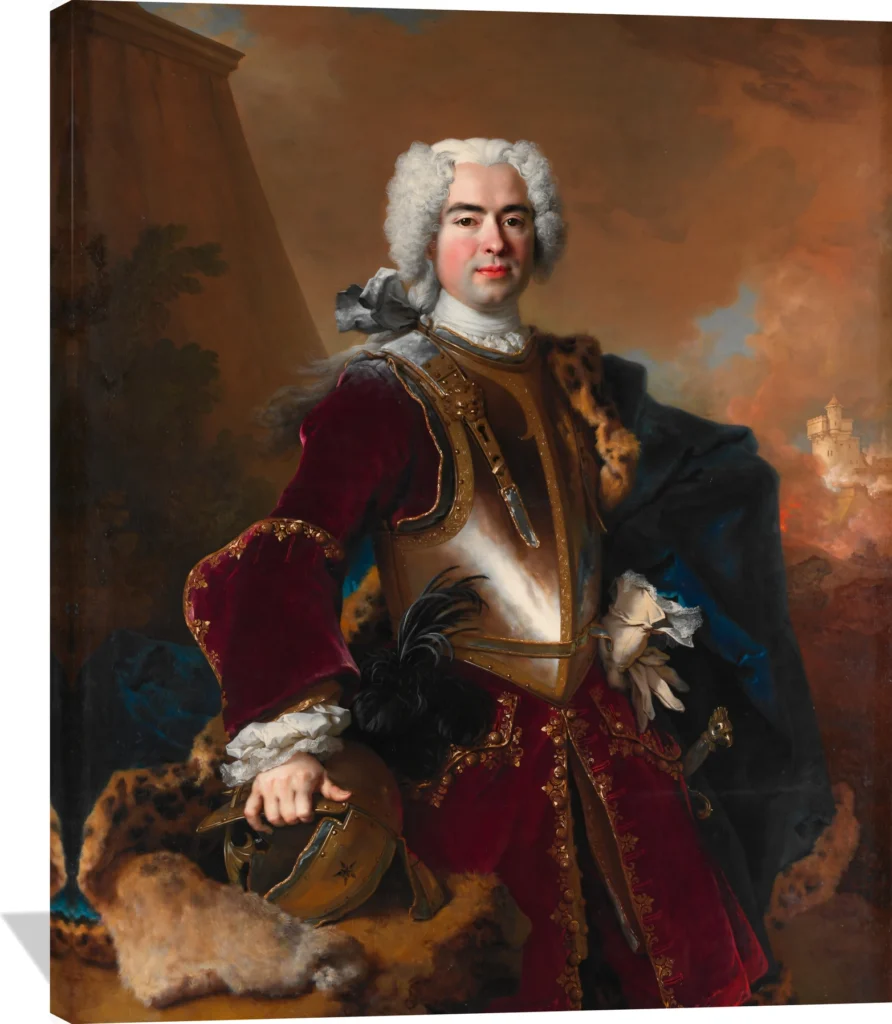
The Nicolas de Largillierre André François Alloys de Theys d’Herculais canvas captures the grandeur of 18th‑century French portraiture with masterful elegance. Rich tones of crimson, gold, and deep blue accentuate the noble figure’s confident stance, set against a softly illuminated sky that evokes timeless dignity and power.
This exquisite wall art brings a sense of refinement and heritage to any interior. Perfect for a study, living room, or entryway, this premium canvas print celebrates Largillierre’s Parisian artistry and the enduring allure of classical portraiture.
Nicolas de Largillierre (1656–1746) was a leading French painter of the late Baroque era, celebrated for his masterful portraits and refined sense of grandeur. Trained in Paris and further shaped by time spent in London and Antwerp, he became one of the most sought‑after portraitists of the French elite.
Artistic Style
Largillierre’s paintings are distinguished by their sumptuous color, meticulous detail, and elegant staging. He excelled in capturing luxurious textures silk, lace, velvet and conveyed a compelling balance of realism and theatricality. His portraits often feature a rich, warm palette and dynamic compositions that reflect the flourishing exuberance of the period.
Notable Subjects
Throughout his long career, Largillierre portrayed members of the French aristocracy, prominent political figures, and influential members of the bourgeoisie. He was particularly admired for his ability to represent both individual character and social stature, giving sitters a commanding yet natural presence.
Contributions and Significance
A pivotal figure in shaping French portraiture, Largillierre brought a distinctive blend of Flemish vitality and French sophistication to the genre. His work offers a vivid window into the cultural climate of late seventeenth‑ and early eighteenth‑century France. As a longtime member of the Académie Royale, he influenced generations of artists with his technical skill and expressive approach.
Legacy
Largillierre’s enduring appeal lies in his ability to elevate portraiture into a form of aristocratic theater, capturing both the likeness and the aura of his subjects. His paintings continue to be celebrated for their opulence, psychological nuance, and impeccable craftsmanship, securing his position as one of the great portrait masters of the French Baroque.
Trust & policies
- 🚚 Free tracked shipping to 45+ countries. Local import duties or taxes may apply in some destinations.
- 🎨 Made-to-order, printed close to your delivery location
- 🛡️ If damaged, defective, or misprinted: free replacement or refund
- 🌍 Printed in US/CA/EU/UK/AU based on delivery location
- 💎 Acid-free, fade-resistant canvas with solid wood stretcher bars
- 🖼️ Optional pine floating frames in white, black, or brown
- 🪝 Ready to hang — hardware pre-installed