
Scene in a Courtyard
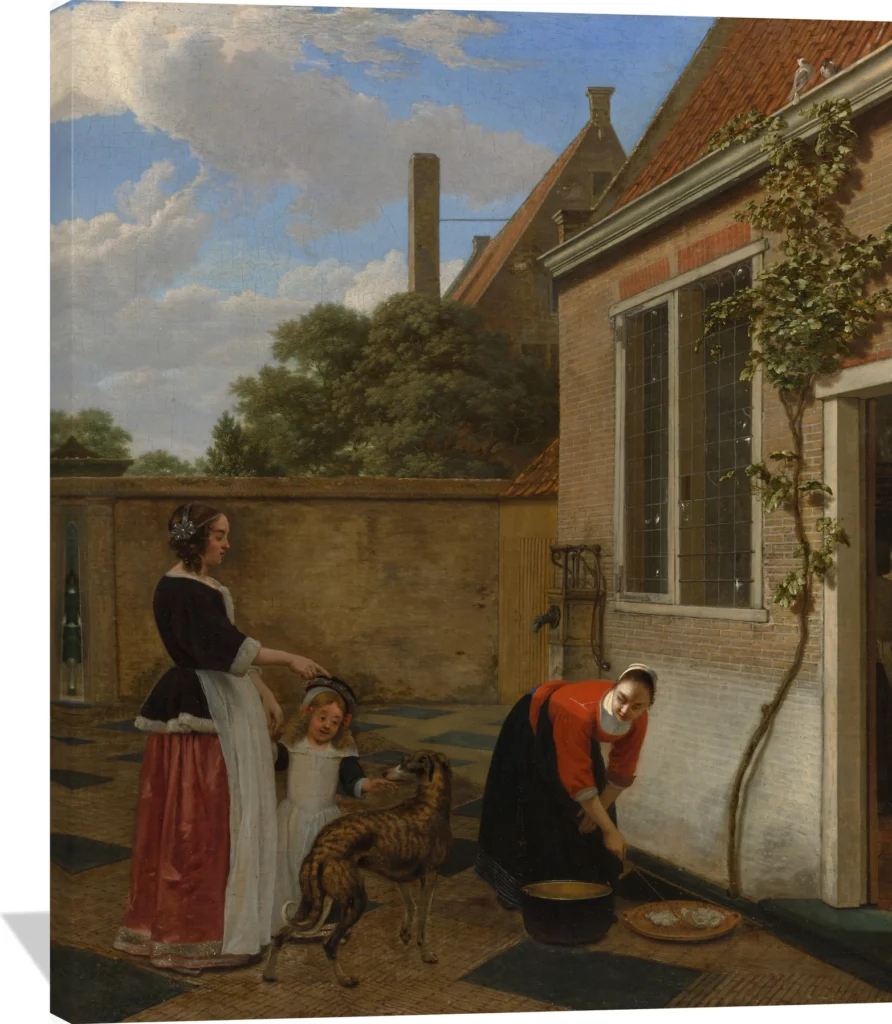
The Ludolf de Jongh Scene in a Courtyard canvas captures a serene moment of daily life in a sunlit Dutch courtyard. Warm brick tones, soft blues, and earthy greens blend harmoniously under a luminous sky, evoking a sense of calm domestic grace. De Jongh’s masterful realism and gentle play of light bring timeless charm to this intimate scene.
This elegant wall art adds a touch of classic refinement to any space—perfect for a living room, study, or entryway. A high-quality canvas print of Scene in a Courtyard invites viewers to pause and appreciate the quiet beauty of ordinary moments, as seen through the eyes of a 17th-century Dutch master.
Ludolf de Jongh (1616–1679) was a distinguished Dutch painter from the Golden Age, active around Rotterdam and its surrounding villages, including Overschie and Hillegersberg. Celebrated for his refined technique and atmospheric compositions, he remains recognized for his vivid evocations of daily life and his elegant command of light and texture.
Artistic Style and Technique
De Jongh’s work is characterized by a harmonious balance of realism and theatricality. His paintings often display a meticulous attention to surface detail, whether in the sheen of satin garments or the weathered textures of architecture. He excelled in creating spatial depth and subtle light gradations, attributes that lend his scenes a distinctive clarity and a strong sense of presence.
Subjects and Themes
Although trained in portraiture, de Jongh’s most celebrated contributions lie in his dynamic genre scenes. He depicted soldiers, huntsmen, travelers, and prosperous townspeople in carefully choreographed settings that feel both intimate and grand. His city views and guardroom scenes reveal an astute understanding of social interaction, while his portraits capture sitters with dignified restraint. Works such as The Officer at Rest and Company in an Interior exemplify his ability to merge narrative, character, and environment with remarkable finesse.
Historical and Cultural Significance
Active during a period of flourishing Dutch commerce and civic pride, de Jongh contributed significantly to Rotterdam’s artistic identity. His paintings provide a nuanced record of 17th‑century urban life, reflecting both its elegance and its everyday rhythms. Known for his connections with prominent local patrons, he created images that resonate with the era’s evolving tastes and social structures.
Legacy
Today, Ludolf de Jongh is valued for the sophistication of his compositions and his ability to transform ordinary moments into scenes of enduring vitality. His blend of narrative richness and technical mastery secures his place among the notable figures of the Dutch Golden Age, making his work a compelling choice for collectors drawn to refined realism and atmospheric storytelling.
Trust & policies
- 🚚 Free tracked shipping to 45+ countries. Local import duties or taxes may apply in some destinations.
- 🎨 Made-to-order, printed close to your delivery location
- 🛡️ If damaged, defective, or misprinted: free replacement or refund
- 🌍 Printed in US/CA/EU/UK/AU based on delivery location
- 💎 Acid-free, fade-resistant canvas with solid wood stretcher bars
- 🖼️ Optional pine floating frames in white, black, or brown
- 🪝 Ready to hang — hardware pre-installed