
The Natchez
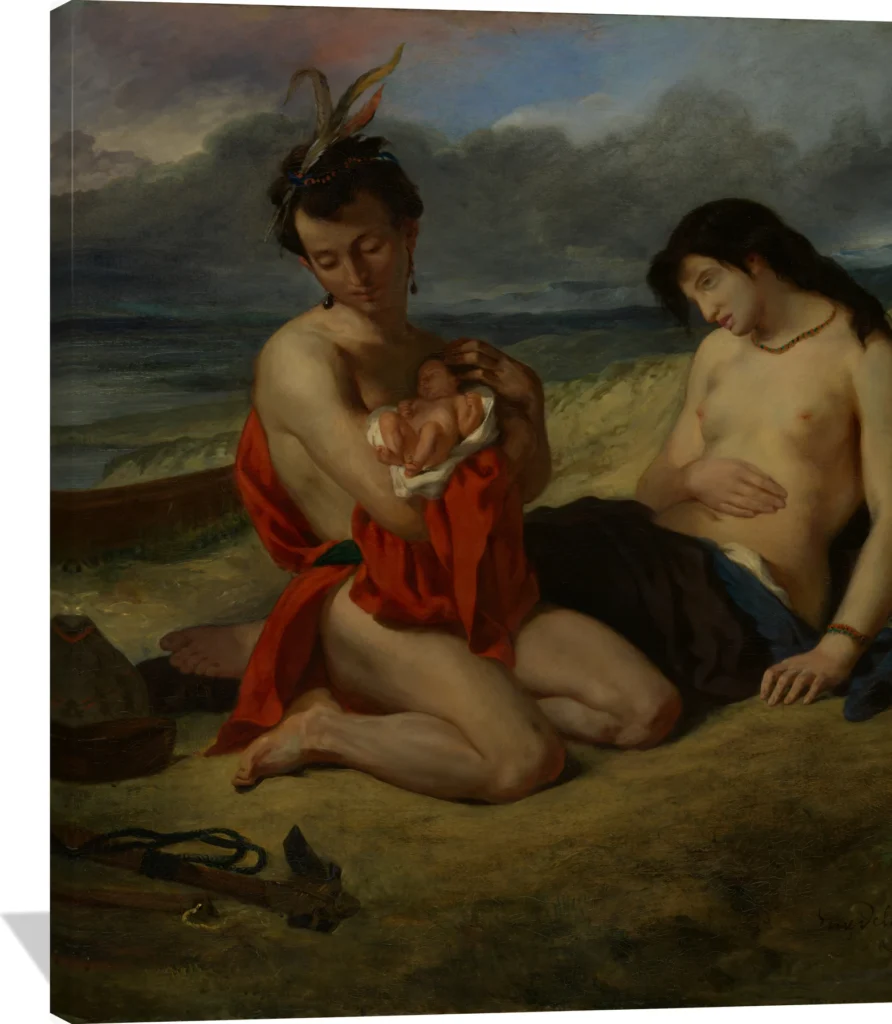
The Eugène Delacroix The Natchez canvas captures a moment of quiet tenderness and human emotion against a dramatic natural backdrop. Rich earth tones, deep reds, and soft blues blend with the golden light of the landscape, creating a timeless balance of intimacy and grandeur. Delacroix’s expressive brushwork and mastery of Romantic color evoke both strength and vulnerability in this poignant scene.
This museum-quality The Natchez wall art brings warmth and depth to any space—ideal for a living room, study, or entryway. A striking canvas print that embodies the emotional power and painterly elegance of one of France’s most celebrated artists.
Eugène Delacroix (1798–1863) was a pioneering French painter whose dynamic vision helped define the spirit of Romanticism. Born in Charenton-Saint-Maurice and active throughout Paris’s vibrant cultural scene, he emerged as a central figure in 19th‑century art, celebrated for his expressive color, emotional intensity, and dramatic compositions.
Artistic Style and Vision
Delacroix’s work is distinguished by its bold palette, sweeping movement, and atmospheric depth. Rejecting the strict precision of Neoclassicism, he embraced a freer, more intuitive approach to brushwork and color. His technique, built on luminous contrasts and richly layered tones, profoundly influenced later generations, including the Impressionists.
Subjects and Themes
His paintings often explore historical conflict, literary drama, and exoticism, reflecting both his erudition and his fascination with the wider world. Scenes inspired by Shakespeare, Goethe, and medieval chronicles sit alongside depictions of North Africa, where he found vivid visual inspiration during his travels. Works such as The Women of Algiers and Liberty Leading the People showcase his ability to merge narrative power with poetic sensuality.
Cultural Significance
Delacroix’s contributions helped shift European art toward a more expressive, emotionally resonant direction. His innovative handling of color and light became foundational for modern painting, while his explorations of heroism, freedom, and human complexity continue to resonate. A master of evocative storytelling, he remains celebrated today as a defining force of Romantic art and a visionary whose influence extended far beyond his lifetime.
Trust & policies
- 🚚 Free tracked shipping to 45+ countries. Local import duties or taxes may apply in some destinations.
- 🎨 Made-to-order, printed close to your delivery location
- 🛡️ If damaged, defective, or misprinted: free replacement or refund
- 🌍 Printed in US/CA/EU/UK/AU based on delivery location
- 💎 Acid-free, fade-resistant canvas with solid wood stretcher bars
- 🖼️ Optional pine floating frames in white, black, or brown
- 🪝 Ready to hang — hardware pre-installed