
Portrait of a Child
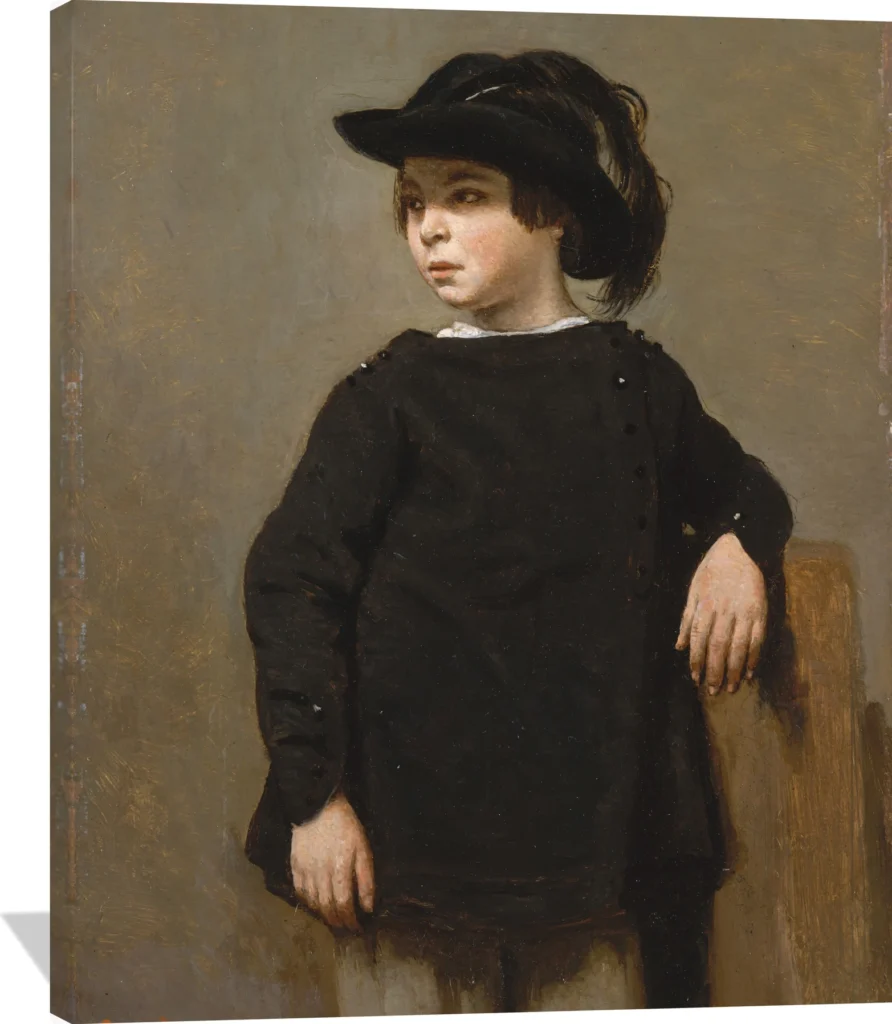
The Camille Corot Portrait of a Child canvas captures a quiet moment of youthful grace through Corot’s refined realism. Soft earth tones, deep blacks, and warm neutrals create a serene balance that draws the eye to the child’s thoughtful expression and poised stance. The gentle play of light and shadow enhances its timeless elegance, making it a striking focal point in any space.
This museum-quality canvas print brings 19th-century French artistry into your home with understated sophistication. Ideal for a living room, study, or entryway, this Corot wall art adds depth, warmth, and a touch of classical refinement to contemporary interiors.
Camille Corot (1796–1875), a French painter born and based in Paris, stands as a pivotal figure in the evolution of 19th‑century landscape art. Celebrated for bridging Neoclassicism and the emerging Impressionist vision, he shaped a new poetic language of nature that influenced generations of artists.
Artistic Style
Corot’s work is defined by its tender tonal harmonies, atmospheric depth, and a masterful balance between observed reality and lyrical interpretation. His paintings often merge precise draftsmanship with soft, diffused light, giving his landscapes a meditative calm. This distinctive blend positioned him as a central innovator of the Barbizon School and a precursor to modern plein‑air painting.
Subjects and Themes
Although renowned for serene landscapes, Corot also produced figure studies marked by quiet elegance. His compositions frequently depict rural pathways, reflective ponds, and ancient trees, often painted on-site during his travels across France and Italy. Works such as Ville d’Avray and Souvenir de Mortefontaine exemplify his gift for infusing familiar scenery with subtle emotion and timeless beauty.
Legacy and Significance
Corot’s influence radiated far beyond his lifetime. His sensitive handling of light and atmosphere opened the way for Impressionist experimentation, while his commitment to painting directly from nature reshaped European landscape traditions. Enduringly admired for their tranquility and refinement, his artworks continue to resonate with collectors and connoisseurs who seek paintings that capture both the spirit of place and the poetry of memory.
Trust & policies
- 🚚 Free tracked shipping to 45+ countries. Local import duties or taxes may apply in some destinations.
- 🎨 Made-to-order, printed close to your delivery location
- 🛡️ If damaged, defective, or misprinted: free replacement or refund
- 🌍 Printed in US/CA/EU/UK/AU based on delivery location
- 💎 Acid-free, fade-resistant canvas with solid wood stretcher bars
- 🖼️ Optional pine floating frames in white, black, or brown
- 🪝 Ready to hang — hardware pre-installed