
Study for a Monument to a Princely Figure
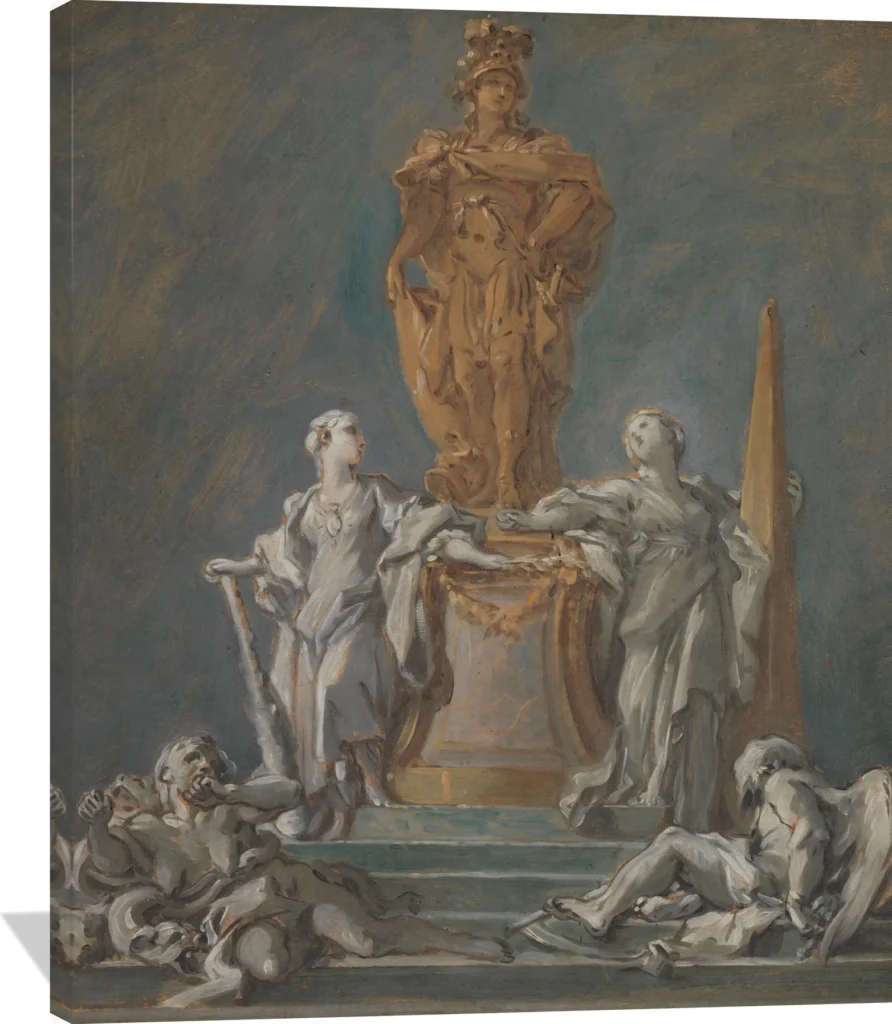
The François Boucher Study for a Monument to a Princely Figure canvas captures the elegance and drama of 18th‑century French artistry. Boucher’s masterful brushwork brings to life a sculptural scene of classical figures, rendered in soft grays, warm ochres, and deep teal tones that glow with refined contrast. The vertical composition and luminous palette evoke grandeur and contemplation, perfect for a space that values timeless sophistication.
This museum‑quality canvas print adds a touch of neoclassical grace to any interior. Ideal for a living room, study, or entryway, it invites admiration and reflection—an exquisite statement piece celebrating the artistry of Parisian refinement.
François Boucher (1703–1770), one of the most celebrated painters of eighteenth‑century France, epitomized the elegance and decorative richness of the Rococo movement. Trained in Paris and later appointed First Painter to King Louis XV, he became a defining artistic voice of the French court and a favored collaborator of Madame de Pompadour.
Artistic Style
Boucher’s work is distinguished by its luminous palette, fluid brushwork, and refined sense of theatricality. His compositions often feature soft pastels, sweeping curves, and a sophisticated interplay of light that enhances the dreamlike quality associated with Rococo art. A master of allegory and pastoral fancy, he shaped the visual language of his era with exceptional grace and invention.
Subjects and Contributions
Boucher is best known for his mythological scenes, idyllic shepherd landscapes, and intimate domestic interiors. Works such as The Triumph of Venus reveal his gift for transforming classical themes into sensual, playful visions. His designs extended beyond painting to tapestry, porcelain, and stage settings, making him a central figure in the decorative arts of the period. Through these contributions, he helped define a unified aesthetic across multiple artistic disciplines.
Legacy
Celebrated for his elegant fantasy and innovative Rococo refinement, Boucher influenced generations of artists and left a lasting mark on French cultural history. His paintings remain enduring icons of eighteenth‑century sophistication, valued for their vitality, charm, and exquisite craftsmanship.
Trust & policies
- 🚚 Free tracked shipping to 45+ countries. Local import duties or taxes may apply in some destinations.
- 🎨 Made-to-order, printed close to your delivery location
- 🛡️ If damaged, defective, or misprinted: free replacement or refund
- 🌍 Printed in US/CA/EU/UK/AU based on delivery location
- 💎 Acid-free, fade-resistant canvas with solid wood stretcher bars
- 🖼️ Optional pine floating frames in white, black, or brown
- 🪝 Ready to hang — hardware pre-installed