
The Victory of Eros
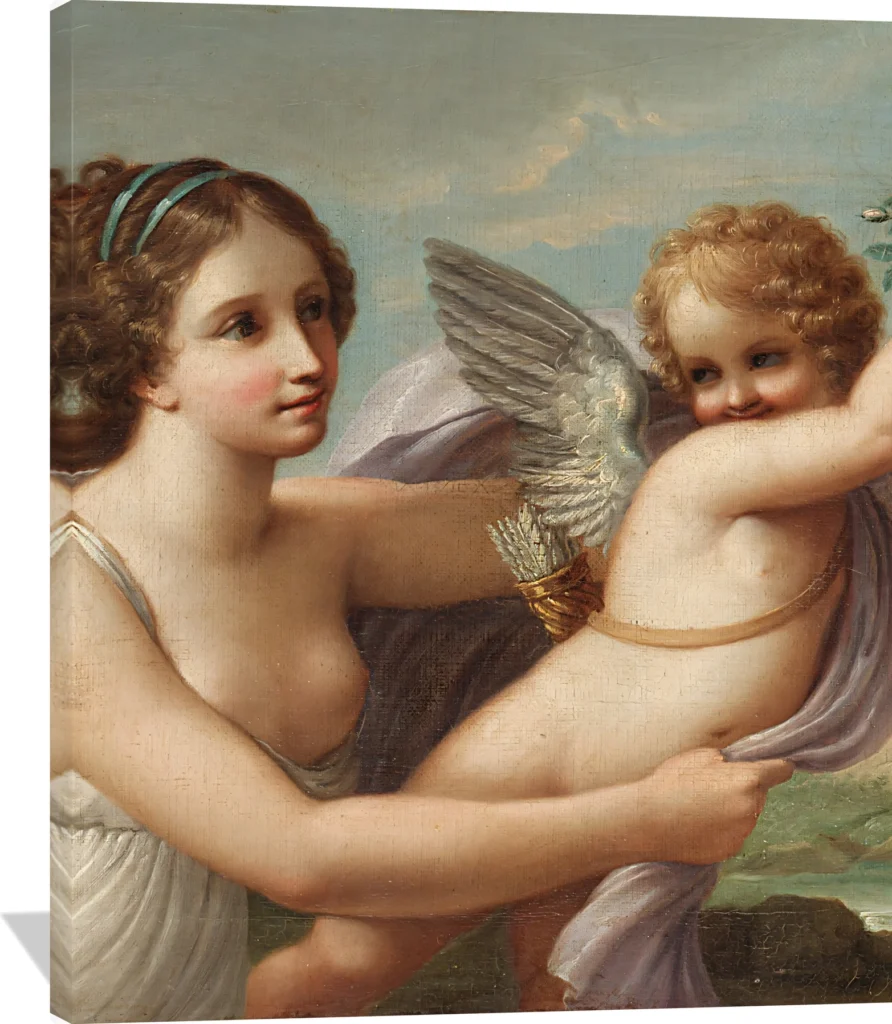
The Angelica Kauffmann The Victory of Eros canvas captures the tender grace of classical mythology with luminous detail. Soft hues of rose, ivory, sky blue, and gold bathe the figures in a serene glow, evoking warmth and romantic harmony. Kauffmann’s refined brushwork and balanced composition bring timeless elegance to any setting.
This exquisite wall art invites a sense of calm beauty and poetic charm, ideal for a living room, study, or entryway. A premium canvas print of this neoclassical masterpiece transforms your space with the delicate allure of love and artistry.
Angelica Kauffmann (Swiss, Chur 1741–1807 Rome) was one of the most celebrated painters of the eighteenth century, renowned for her refined Neoclassical style and her role as a pioneering woman in the European art world.
Artistic Style and Approach
Kauffmann’s work blends the clarity and balance of Neoclassicism with a distinctive warmth and emotional depth. She favored harmonious compositions, graceful figures, and a polished finish that reflected her exceptional draftsmanship. Her mastery of color and her sensitivity to expression made her paintings both intellectually engaging and visually elegant.
Subjects and Themes
Kauffmann became especially known for her history paintings, portraits, and allegorical scenes. Drawing inspiration from classical literature and moral philosophy, she portrayed mythological figures, heroic narratives, and personifications of virtues. Her portraits, meanwhile, reveal keen psychological insight, often presenting sitters with a sense of virtue, intellect, and poise.
Notable Contributions
A founding member of the Royal Academy in London, Kauffmann was one of the institution’s only female founders, marking her as a trailblazer in European art. Her ability to work successfully across genres particularly history painting, traditionally dominated by men established her as a key figure in shaping the visual language of Neoclassicism.
Cultural Significance
Kauffmann’s prominence across Europe, from London to Rome, reflects her rare combination of artistic skill, intellectual engagement, and diplomatic presence within elite cultural circles. Her paintings remain admired for their poetic sensibility and their refined articulation of classical ideals, securing her legacy as a defining voice of early Neoclassical painting.
Trust & policies
- 🚚 Free tracked shipping to 45+ countries. Local import duties or taxes may apply in some destinations.
- 🎨 Made-to-order, printed close to your delivery location
- 🛡️ If damaged, defective, or misprinted: free replacement or refund
- 🌍 Printed in US/CA/EU/UK/AU based on delivery location
- 💎 Acid-free, fade-resistant canvas with solid wood stretcher bars
- 🖼️ Optional pine floating frames in white, black, or brown
- 🪝 Ready to hang — hardware pre-installed