
A Bit of War History: The Veteran
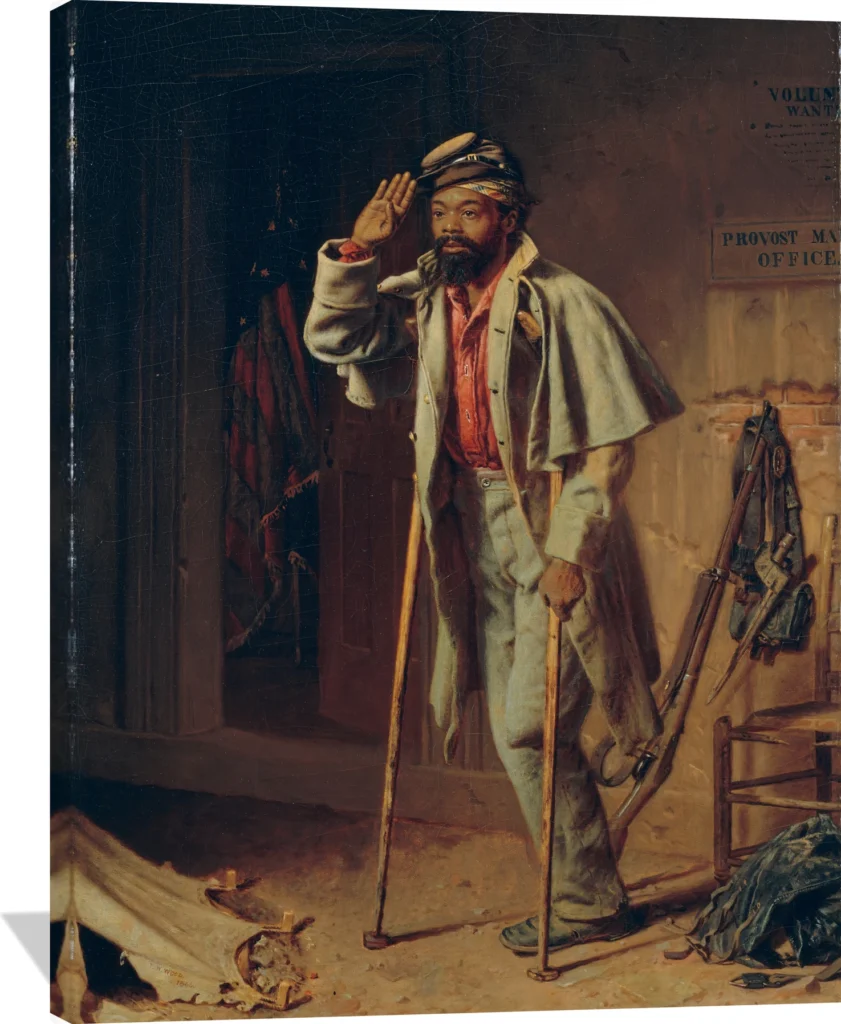
The Thomas Waterman Wood A Bit of War History: The Veteran canvas captures a moment of quiet dignity and resilience. Rendered in warm earth tones of brown, gray, and muted red, the scene portrays a wounded soldier standing proudly, his expression filled with strength and reflection. Wood’s masterful realism and human empathy make this piece a timeless tribute to perseverance and honor.
This museum-quality canvas print brings historical depth and emotional resonance to any space. Ideal for a study, library, or living room, this evocative wall art invites contemplation and conversation, celebrating both artistry and the enduring human spirit.
Thomas Waterman Wood (1823–1903) was an American painter born in Montpelier, Vermont, who later built a distinguished career in New York. Revered for his narrative realism and keen observational detail, Wood became known for genre scenes that sensitively portray everyday life in nineteenth‑century America.
Artistic Style
Wood’s work is defined by a refined, meticulous realism. His paintings often center on carefully rendered figures, with attention to gesture, expression, and texture. He combined technical precision with warmth and humanity, creating scenes that feel both intimate and authentic. His mastery of light and surface gives his works a quiet luminosity that enhances their emotional impact.
Subjects and Themes
Wood is celebrated for his depictions of ordinary people engaged in daily tasks, including craftsmen, laborers, children, and domestic interiors. He frequently explored narratives of personal character, dignity, and social nuance. Many of his compositions feature American cultural life after the Civil War, offering insight into shifting social realities. His works such as The Yankee Pedlar and Contraband, Recruit, Veteran remain notable for their storytelling quality and human depth.
Contributions and Significance
During his lifetime, Wood became a respected figure in the American art community, serving as president of the National Academy of Design. His commitment to portraying American subjects with sincerity and respect helped shape the development of genre painting in the United States. Wood’s ability to balance technical finesse with narrative clarity made him a compelling voice within nineteenth‑century realism.
Today, Thomas Waterman Wood is remembered for his empathetic realism and his richly observed scenes of American life. His paintings continue to resonate for their craftsmanship, cultural insight, and enduring narrative charm.
Trust & policies
- 🚚 Free tracked shipping to 45+ countries. Local import duties or taxes may apply in some destinations.
- 🎨 Made-to-order, printed close to your delivery location
- 🛡️ If damaged, defective, or misprinted: free replacement or refund
- 🌍 Printed in US/CA/EU/UK/AU based on delivery location
- 💎 Acid-free, fade-resistant canvas with solid wood stretcher bars
- 🖼️ Optional pine floating frames in white, black, or brown
- 🪝 Ready to hang — hardware pre-installed