
Henry La Tourette de Groot
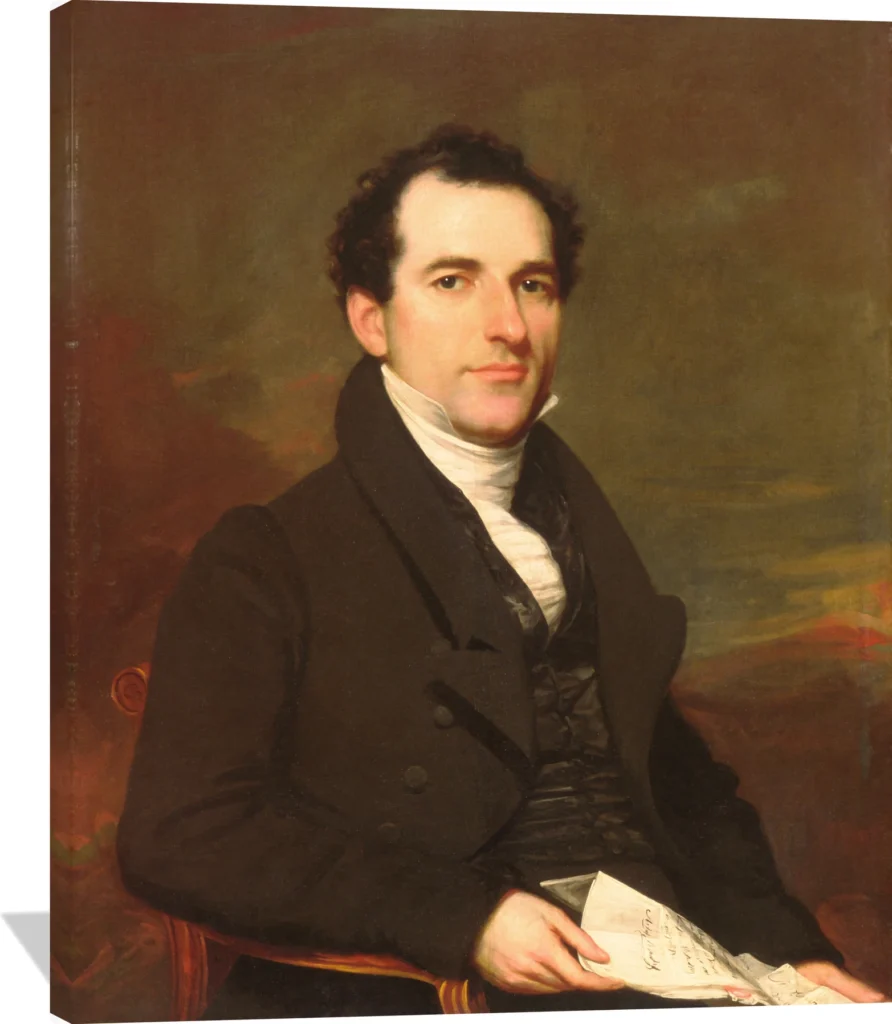
The Samuel Lovett Waldo Henry La Tourette de Groot canvas captures timeless sophistication through refined portraiture and masterful use of light. Rich tones of deep brown, warm gold, and muted green create an atmosphere of quiet confidence, while the sitter’s poised expression evokes intellect and grace. Waldo’s neoclassical precision and subtle brushwork make this piece a striking focal point for any art lover’s collection.
This elegant wall art brings a sense of heritage and depth to contemporary interiors. Ideal for a study, library, or formal living room, this exquisite canvas print honors early American artistry with enduring style and presence.
Samuel Lovett Waldo (1783–1861) was a distinguished American portrait painter whose refined technique and expressive realism made him a sought-after figure in early nineteenth‑century art. Known for his ability to capture both likeness and character, Waldo helped shape the visual identity of the young United States through his depictions of civic leaders, intellectuals, and prominent families.
Artistic Style
Waldo’s style blended the clarity of American Neoclassicism with the warmth and subtle atmospheric effects of the English portrait tradition. His paintings often feature carefully modeled faces, graceful poses, and understated yet evocative lighting. The result is a body of work that conveys dignity without austerity, revealing the inner presence of his sitters with remarkable sensitivity.
Subjects and Notable Contributions
Best known for his portraits, Waldo portrayed statesmen, merchants, and notable cultural figures, creating images that now serve as visual records of a formative era in American history. His collaborative studio with William Jewett produced many influential works, and their partnership became a cornerstone of New York’s early artistic community. The widely admired portrait The Greenwich Village Blacksmith stands among his most recognizable contributions.
Cultural and Historical Significance
Waldo played an important role in establishing professional art practice in the United States at a time when the nation was still defining its artistic identity. His refined compositions and commitment to capturing character helped elevate American portraiture, earning him a place among the early masters of the genre. Today, his works endure as essential expressions of nineteenth‑century American visual culture and continue to be appreciated for their craftsmanship and insight.
Trust & policies
- 🚚 Free tracked shipping to 45+ countries. Local import duties or taxes may apply in some destinations.
- 🎨 Made-to-order, printed close to your delivery location
- 🛡️ If damaged, defective, or misprinted: free replacement or refund
- 🌍 Printed in US/CA/EU/UK/AU based on delivery location
- 💎 Acid-free, fade-resistant canvas with solid wood stretcher bars
- 🖼️ Optional pine floating frames in white, black, or brown
- 🪝 Ready to hang — hardware pre-installed