
Horseneck Falls
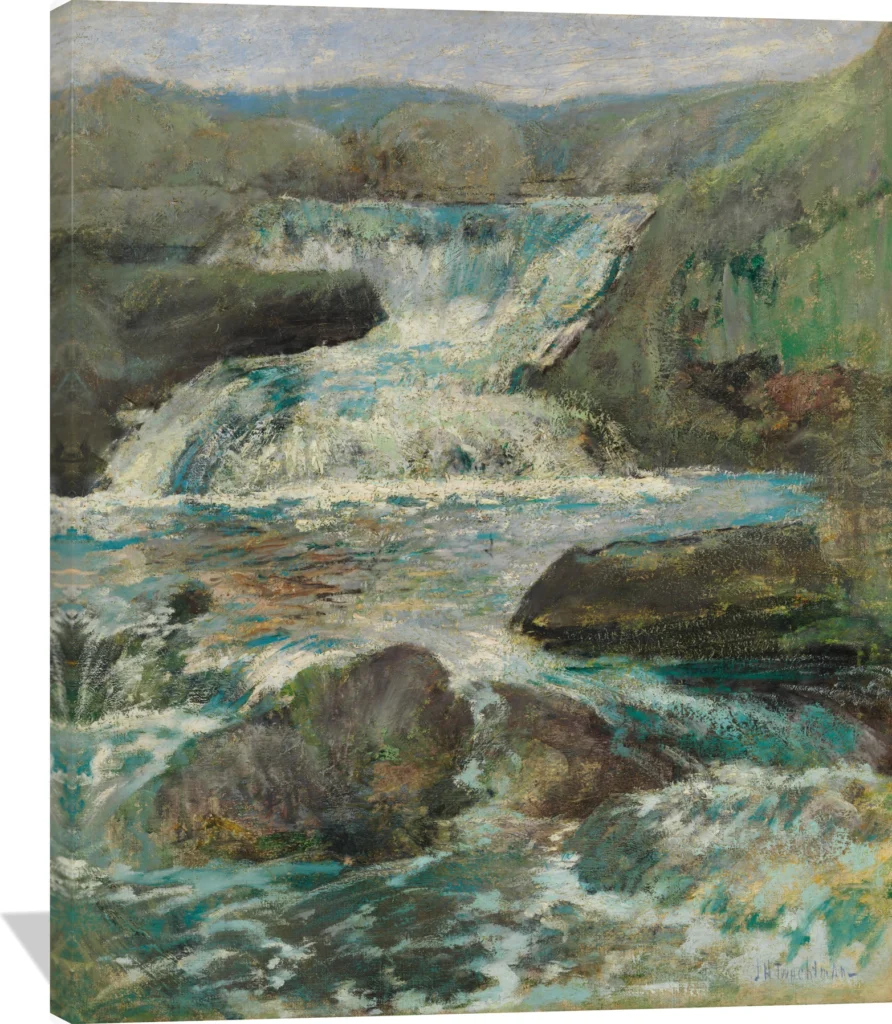
John Henry Twachtman’s Horseneck Falls canvas captures the serene energy of cascading water framed by soft green hills and misty light. Rendered in Twachtman’s signature impressionistic style, the scene blends hues of turquoise, moss green, and stone gray, evoking the tranquil rhythm of nature in motion. The textured brushwork and gentle palette invite a sense of calm and reflection.
This exquisite canvas print brings timeless elegance to any space—perfect for a living room, study, or entryway seeking a touch of natural harmony. A refined choice for collectors and art lovers drawn to the quiet beauty of American Impressionism.
John Henry Twachtman (1853–1902) was an American painter born in Cincinnati, Ohio, and later active in Gloucester, Massachusetts. A key figure in late‑19th‑century American art, he is celebrated for his poetic landscapes and his distinctive interpretation of Impressionism.
Artistic Style
Twachtman developed a subtle, atmospheric approach marked by soft tonal harmonies, quiet compositions, and an intimate sense of place. While associated with American Impressionism, his work often carried a more introspective and experimental quality, blending influences from European training with a uniquely personal vision. His paintings are recognized for their refined brushwork, nuanced color, and a focus on capturing fleeting natural effects.
Subjects and Themes
Best known for serene landscapes, Twachtman frequently painted the surroundings of his Connecticut home, coastal scenes of Gloucester, and the changing seasons. Snow‑laden fields, secluded gardens, waterfalls, and quiet harbors appear throughout his oeuvre. Works such as Arques-la-Bataille and Winter Harmony reveal his fascination with atmosphere, mood, and the subtle interplay of light and nature.
Legacy
A member of the influential group known as The Ten, Twachtman played a significant role in shaping a more modern, expressive direction within American art. His commitment to capturing the poetic essence of the landscape and his pursuit of aesthetic innovation established him as a defining voice of American Impressionism. Today, his paintings remain admired for their quiet power, refined beauty, and enduring contribution to the evolution of American landscape painting.
Trust & policies
- 🚚 Free tracked shipping to 45+ countries. Local import duties or taxes may apply in some destinations.
- 🎨 Made-to-order, printed close to your delivery location
- 🛡️ If damaged, defective, or misprinted: free replacement or refund
- 🌍 Printed in US/CA/EU/UK/AU based on delivery location
- 💎 Acid-free, fade-resistant canvas with solid wood stretcher bars
- 🖼️ Optional pine floating frames in white, black, or brown
- 🪝 Ready to hang — hardware pre-installed