
Mountain Range
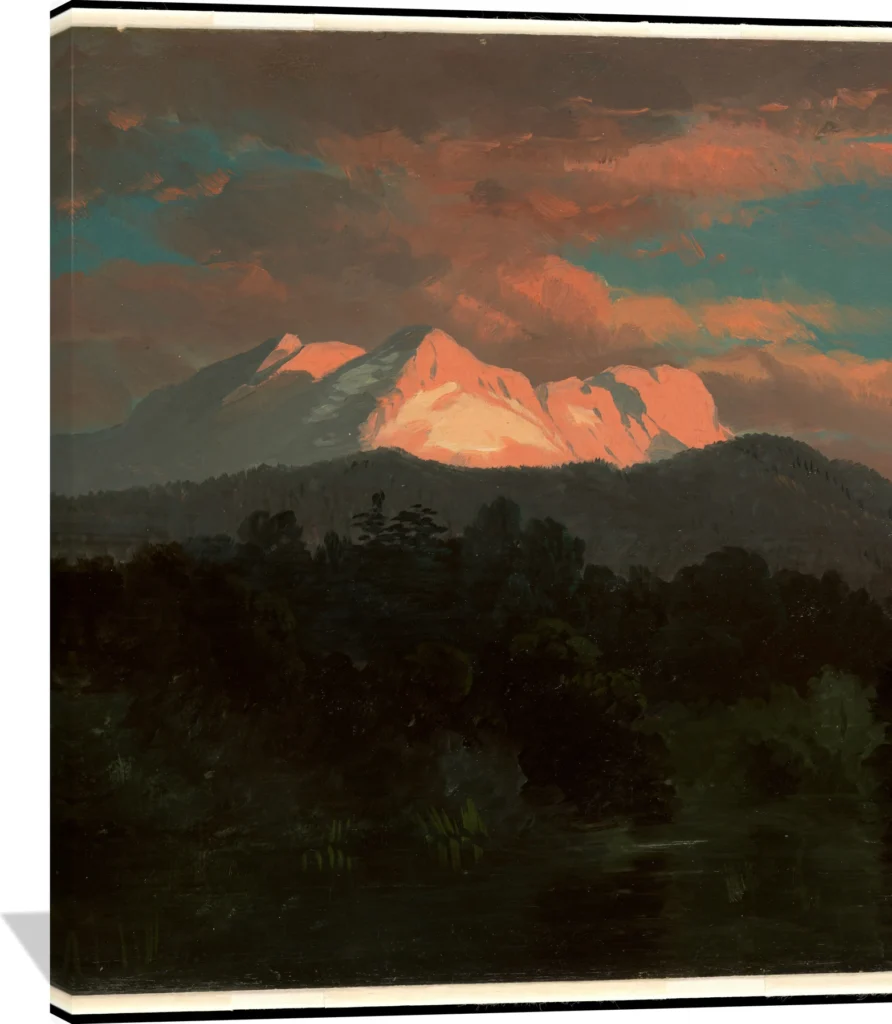
The James M. Hart Mountain Range canvas captures the serene majesty of nature at dusk, where soft rose and amber light brushes across snow-capped peaks above deep forest shadows. Rich tones of emerald green, warm coral, and twilight blue create a harmonious balance between tranquility and grandeur, evoking the peaceful stillness of the American wilderness.
This premium canvas print brings timeless beauty and quiet strength to any space—perfect for a living room, study, or entryway. A masterful example of 19th-century landscape artistry, Hart’s composition invites reflection and calm, making it an enduring centerpiece for your wall art collection.
James M. Hart (American, born Scotland, Kilmarnock 1828–1901 New York) was a prominent 19th‑century painter celebrated for his evocative landscapes and pastoral scenes. Raised in the United States after emigrating as a child, Hart became closely associated with the Hudson River School, a movement known for its reverence for nature and its richly detailed portrayals of the American landscape.
Artistic Style
Hart’s work is distinguished by its luminous naturalism, balanced compositions, and atmospheric depth. His paintings often feature meticulous attention to light, foliage, and terrain, revealing both technical precision and a poetic sensitivity to the natural world. He frequently infused his scenes with a gentle romanticism, creating works that embodied the ideals of the Hudson River School while maintaining his own expressive clarity.
Subjects and Themes
Though he explored various landscape settings, Hart is best known for his serene depictions of rural America. Cattle appear as recurring motifs, placed within sweeping meadows, forested glens, or tranquil riverbanks. These compositions offered viewers an idealized vision of agrarian life and highlighted Hart’s talent for capturing the quiet harmony between humans, animals, and the land. Seasonal changes, shifting atmospheres, and subtle narrative elements often enrich his scenes.
Legacy
By the late 19th century, Hart had become a respected figure in American art, contributing to the development and popularization of landscape painting. His works reflect a period when the nation’s natural beauty was increasingly celebrated, and they continue to offer insight into the cultural values and artistic aspirations of the era. Today, Hart’s paintings remain admired for their emotional warmth, technical refinement, and enduring vision of the American pastoral tradition.
Trust & policies
- 🚚 Free tracked shipping to 45+ countries. Local import duties or taxes may apply in some destinations.
- 🎨 Made-to-order, printed close to your delivery location
- 🛡️ If damaged, defective, or misprinted: free replacement or refund
- 🌍 Printed in US/CA/EU/UK/AU based on delivery location
- 💎 Acid-free, fade-resistant canvas with solid wood stretcher bars
- 🖼️ Optional pine floating frames in white, black, or brown
- 🪝 Ready to hang — hardware pre-installed