
Mezzetin
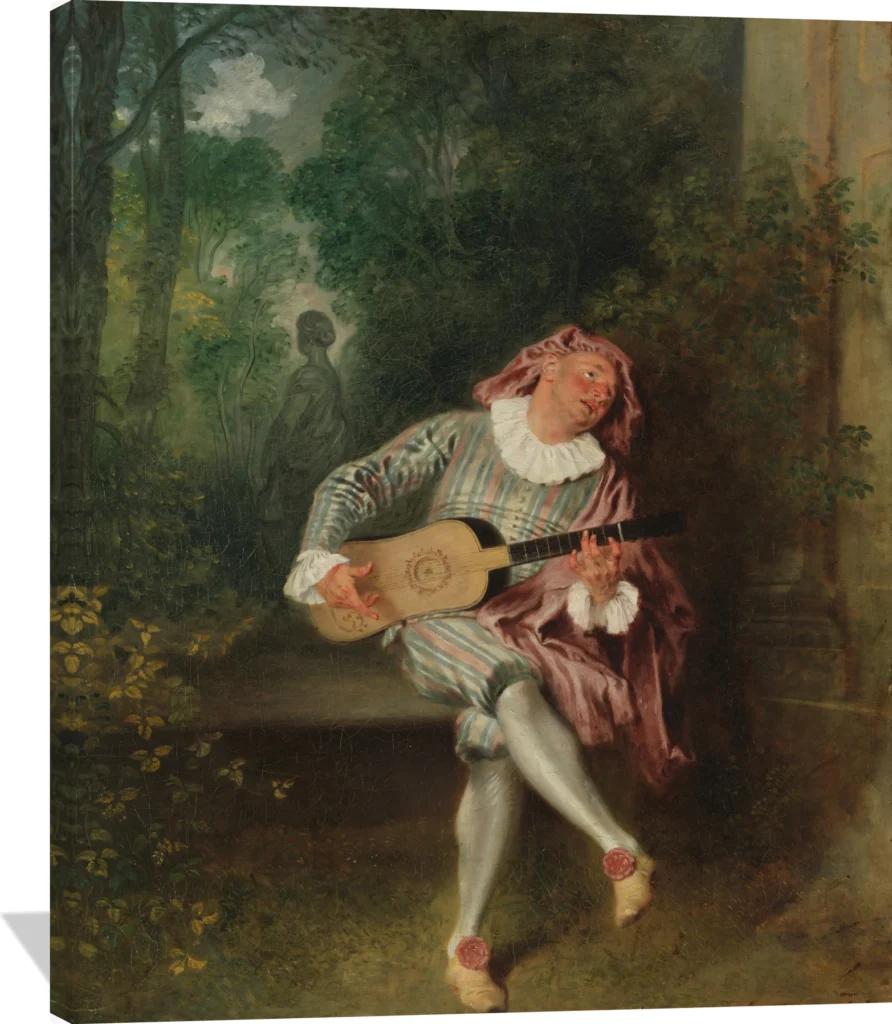
The Antoine Watteau Mezzetin canvas captures the charm and elegance of 18th-century French art. A graceful musician in striped costume strums his guitar amid a lush, romantic garden, bathed in soft greens, warm golds, and rose tones. Watteau’s delicate brushwork and luminous palette evoke a sense of wistful melody and refined emotion.
This exquisite Mezzetin wall art brings a touch of poetic sophistication to any space. Perfect for a living room, study, or entryway, this canvas print celebrates the timeless allure of music, theater, and the fleeting beauty of human expression.
Antoine Watteau (1684–1721) was a French painter whose brief yet influential career reshaped early eighteenth‑century art. Born in Valenciennes and active primarily around Paris, he became a defining figure of the Rococo era, bringing an unprecedented delicacy and poetic sensibility to European painting.
Artistic Style
Watteau is celebrated for pioneering the fête galante, a genre characterized by elegant gatherings set in dreamlike pastoral landscapes. His style blends refined brushwork with subtle, shimmering color harmonies, creating scenes that appear at once intimate, theatrical, and lightly touched by melancholy. His compositions often feel spontaneous, yet they are constructed with exceptional grace and sensitivity to movement.
Subjects and Inspiration
The artist’s subjects frequently include aristocratic figures engaged in music, flirtation, or leisurely walks, often set within lush gardens or woodland clearings. Watteau drew inspiration from Italian commedia dell’arte performers, whose expressive costumes and gestures appear throughout his work. Pieces such as Pierrot and The Embarkation for Cythera reveal his gift for capturing nuanced emotion, from playful charm to quiet longing.
Legacy and Significance
Though he died at just thirty‑six, Watteau profoundly influenced the direction of French art. His poetic vision bridged the grandeur of the Baroque and the intimate elegance of the Rococo, shaping the tastes of eighteenth‑century patrons and inspiring generations of painters. Today, he is admired for his distinctive ability to fuse fantasy with psychological depth, elevating scenes of pleasure into works of lasting cultural resonance.
Trust & policies
- 🚚 Free tracked shipping to 45+ countries. Local import duties or taxes may apply in some destinations.
- 🎨 Made-to-order, printed close to your delivery location
- 🛡️ If damaged, defective, or misprinted: free replacement or refund
- 🌍 Printed in US/CA/EU/UK/AU based on delivery location
- 💎 Acid-free, fade-resistant canvas with solid wood stretcher bars
- 🖼️ Optional pine floating frames in white, black, or brown
- 🪝 Ready to hang — hardware pre-installed