
Rustic Interior
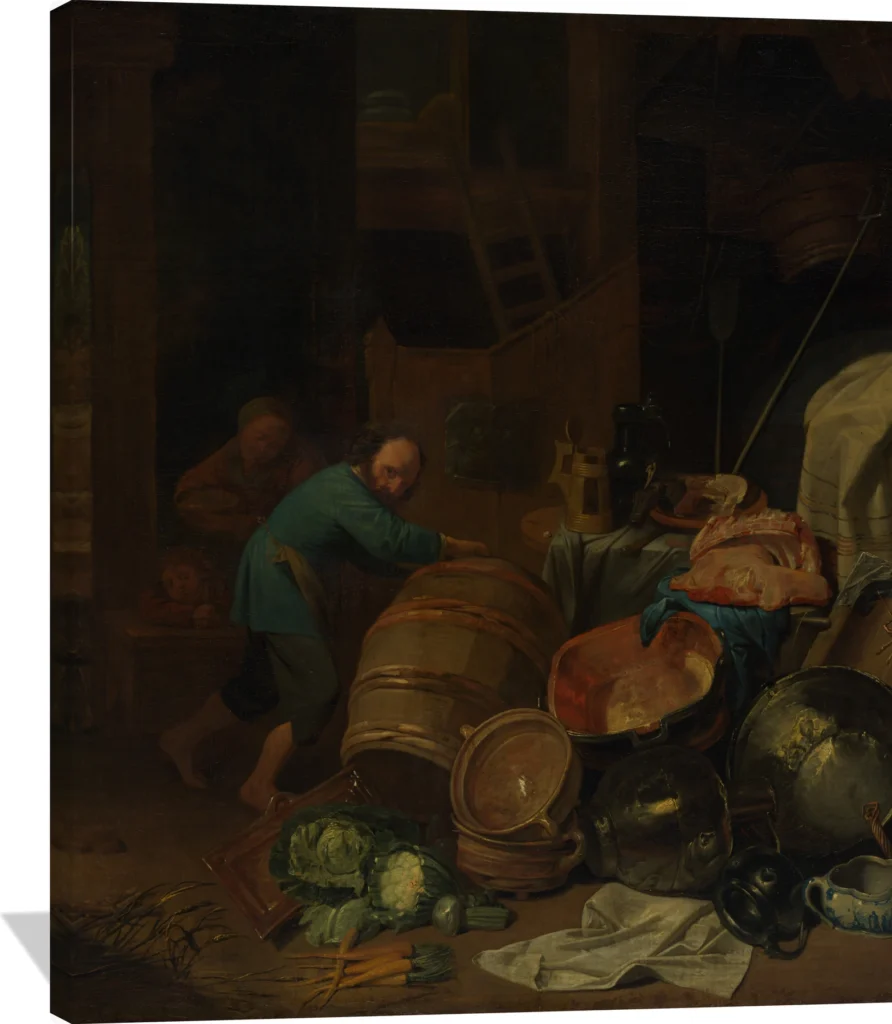
The David Ryckaert III Rustic Interior canvas captures the quiet rhythm of everyday life in a dimly lit Flemish home. Earthy browns, deep greens, and warm ochres blend with soft highlights to evoke the texture of wood, copper, and cloth. A man at work among barrels and cookware draws the viewer into a timeless domestic moment, rich with detail and atmosphere.
This masterful wall art brings a touch of Old World charm to any setting. Ideal for a study, dining room, or entryway, this canvas print adds depth and warmth, inviting reflection on craftsmanship and the beauty of ordinary life.
David Ryckaert III (1612–1661) was a distinguished Flemish painter whose work embodies the warmth, vitality, and psychological depth of seventeenth-century genre painting. Active in Antwerp, he belonged to a prominent artistic family and became one of the city’s notable contributors to domestic and everyday-life scenes.
Artistic Style
Ryckaert’s paintings are characterized by finely observed detail, richly textured surfaces, and a balanced interplay of light and shadow. His brushwork often enhances the tactile qualities of fabrics, rustic interiors, and humble household items. A hallmark of his style is the subtle narrative tension he infuses into seemingly ordinary moments, elevating familiar subjects into engaging visual stories.
Subjects and Themes
He is best known for intimate depictions of daily life, including kitchen scenes, workshop interiors, and moments of quiet domestic labor. Ryckaert frequently portrayed craftsmen, musicians, and families, capturing both the physical environment and the emotional atmosphere surrounding them. Works such as The Alchemist or The Lace Maker illustrate his affinity for portraying people absorbed in their trades, rendered with a sensitivity that reveals his deep interest in human character.
Contribution and Significance
As part of Antwerp’s flourishing artistic community, Ryckaert contributed meaningfully to the development of genre painting during the Baroque era. His scenes stand out for their nuanced humanity and meticulous depiction of everyday objects, offering insight into the social fabric of seventeenth-century Flanders. Through his carefully crafted compositions and expressive figures, he helped define the period’s shift toward more intimate, relatable subjects.
Today, David Ryckaert III is recognized for his refined genre sensibility and his ability to transform simple moments into resonant visual experiences. His work remains prized for its authenticity, craftsmanship, and enduring charm.
Trust & policies
- 🚚 Free tracked shipping to 45+ countries. Local import duties or taxes may apply in some destinations.
- 🎨 Made-to-order, printed close to your delivery location
- 🛡️ If damaged, defective, or misprinted: free replacement or refund
- 🌍 Printed in US/CA/EU/UK/AU based on delivery location
- 💎 Acid-free, fade-resistant canvas with solid wood stretcher bars
- 🖼️ Optional pine floating frames in white, black, or brown
- 🪝 Ready to hang — hardware pre-installed