
Eunice Harriet Brigham
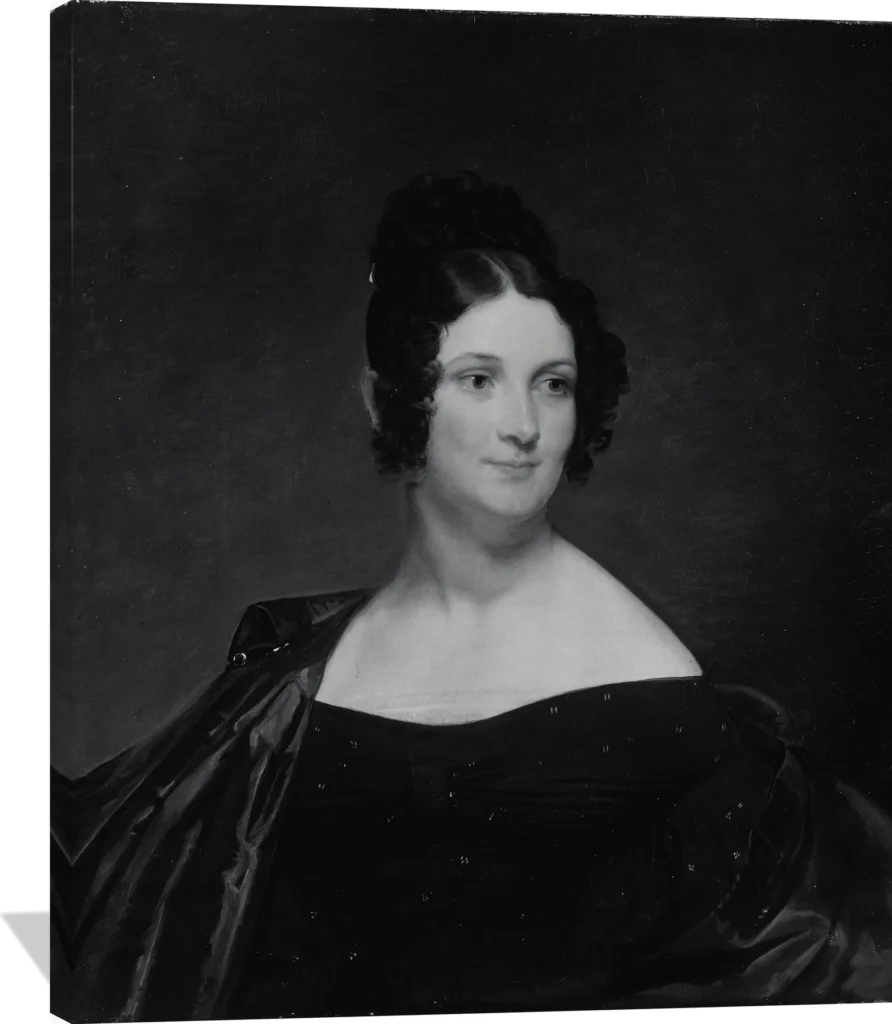
The Chester (Charles) Harding Eunice Harriet Brigham canvas captures timeless grace through refined realism and soft chiaroscuro. The portrait features a poised woman illuminated against a deep, velvety background, rendered in elegant tones of charcoal, ivory, and subtle sepia. Harding’s masterful brushwork evokes quiet dignity and classic sophistication.
This museum-quality canvas print brings 19th-century elegance into modern interiors. Ideal for a living room, study, or entryway, the Eunice Harriet Brigham wall art adds a sense of calm refinement and historical depth to any space—an enduring tribute to American portrait artistry.
Chester (Charles) Harding was an American portraitist born in Conway, Massachusetts, in 1792 and active through the mid-nineteenth century, concluding his career in Boston in 1866. Largely self-taught, he rose from humble beginnings to become one of the most sought-after portrait painters of his generation.
Artistic Style and Approach
Harding’s work is distinguished by its refined naturalism and quiet psychological insight. His portraits balance measured realism with a gentle idealization, capturing the physical likeness of his sitters while revealing a sense of character and presence. His carefully modulated lighting and smooth, unembellished brushwork became hallmarks of his mature style.
Notable Subjects and Career Highlights
Harding built his reputation by portraying prominent political, military, and social figures of early nineteenth-century America. His sitters included statesmen, frontier leaders, and cultural influencers, reflecting his strong standing among the nation’s elite. He was widely recognized for his ability to render expressive faces and poised, dignified compositions that conveyed both individuality and status.
Cultural and Historical Significance
As portraiture flourished in the United States during a period of expanding national identity, Harding became a significant contributor to the visual record of the era. His paintings offer an important window into the personalities and ambitions that shaped the young republic. Today, his work endures for its grace, clarity, and subtle emotional depth, exemplifying the artistry of a self-made painter who helped define American portraiture.
Trust & policies
- 🚚 Free tracked shipping to 45+ countries. Local import duties or taxes may apply in some destinations.
- 🎨 Made-to-order, printed close to your delivery location
- 🛡️ If damaged, defective, or misprinted: free replacement or refund
- 🌍 Printed in US/CA/EU/UK/AU based on delivery location
- 💎 Acid-free, fade-resistant canvas with solid wood stretcher bars
- 🖼️ Optional pine floating frames in white, black, or brown
- 🪝 Ready to hang — hardware pre-installed