
Bouquet of Chrysanthemums
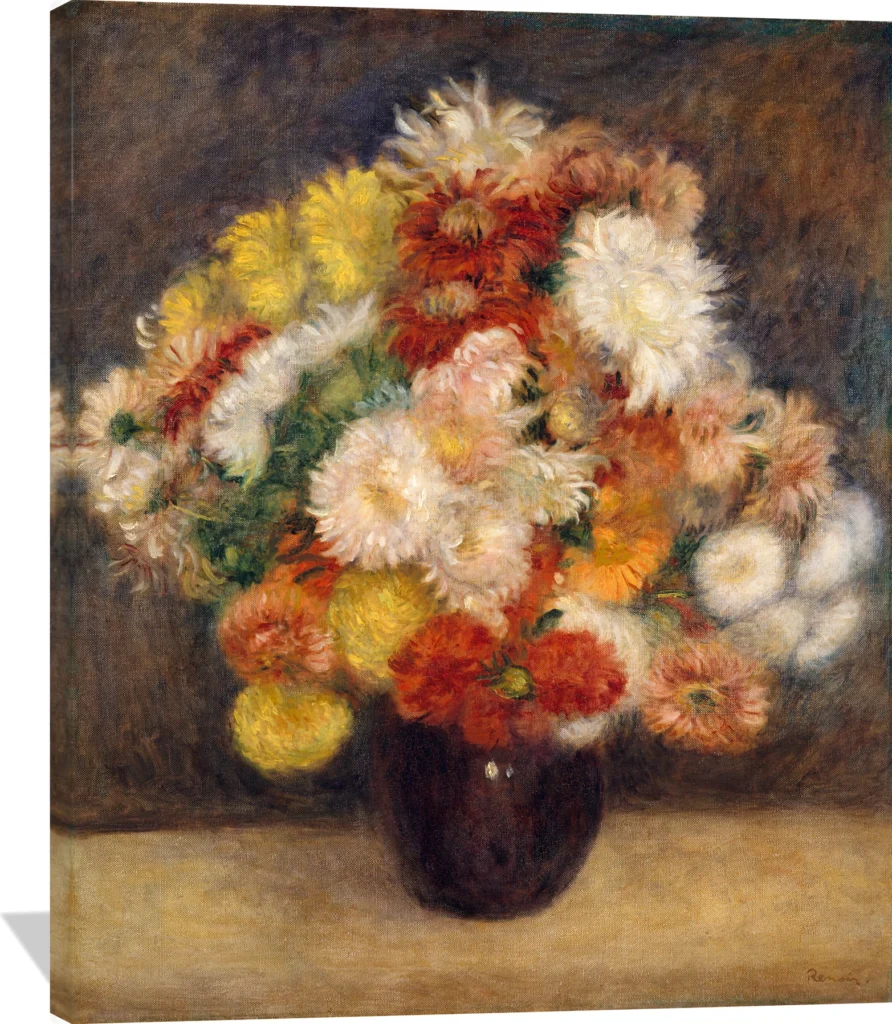
The Auguste Renoir Bouquet of Chrysanthemums canvas captures the timeless elegance of Impressionist floral painting. Soft brushwork and radiant tones of crimson, gold, ivory, and rose bloom from a deep earthen vase, creating a luminous harmony that feels both spontaneous and serene. Renoir’s masterful play of light and texture transforms a simple bouquet into a celebration of color and life.
This exquisite wall art brings warmth and refinement to any space—perfect for a living room, study, or entryway. A Renoir canvas print like this adds a touch of classic French artistry to modern interiors, inviting a sense of calm beauty and enduring charm.
Auguste Renoir (1841–1919) was a French painter whose luminous touch and celebration of modern life helped define the Impressionist movement. Born in Limoges and later active in Paris, he developed a style renowned for its warmth, fluidity, and sensitivity to light. His work captured the elegance of everyday moments, making him one of the most beloved figures in nineteenth‑century art.
Artistic Style
Renoir’s mature style is distinguished by soft, radiant color, gentle modeling, and a focus on the sensuous qualities of paint. Though closely associated with Impressionism, he maintained a strong interest in classical harmony, producing works that blend spontaneous brushwork with a refined sense of composition. His surfaces often shimmer with diffused light, revealing his exceptional ability to translate atmosphere onto canvas.
Subjects and Themes
Renoir is celebrated for intimate figure paintings, graceful portraits, and vibrant scenes of leisure. His depictions of Parisian cafes, gardens, and gatherings such as his iconic Dance at Le Moulin de la Galette embody a modern, optimistic vision of society. He also produced tender studies of women and children, capturing expressions and gestures with a distinctive warmth that became a hallmark of his work. His late landscapes, created while living in the South of France, showcase radiant color and a deep connection to nature.
Legacy and Significance
As a founding force in Impressionism and one of its most enduring voices, Renoir helped transform the visual language of modern art. His pursuit of beauty, color, and human presence left a profound impact on future generations of painters. Today, Renoir’s work remains celebrated for its exuberant light and its joyful humanity, qualities that continue to resonate with collectors and admirers around the world.
Trust & policies
- 🚚 Free tracked shipping to 45+ countries. Local import duties or taxes may apply in some destinations.
- 🎨 Made-to-order, printed close to your delivery location
- 🛡️ If damaged, defective, or misprinted: free replacement or refund
- 🌍 Printed in US/CA/EU/UK/AU based on delivery location
- 💎 Acid-free, fade-resistant canvas with solid wood stretcher bars
- 🖼️ Optional pine floating frames in white, black, or brown
- 🪝 Ready to hang — hardware pre-installed