
Preston Hodges
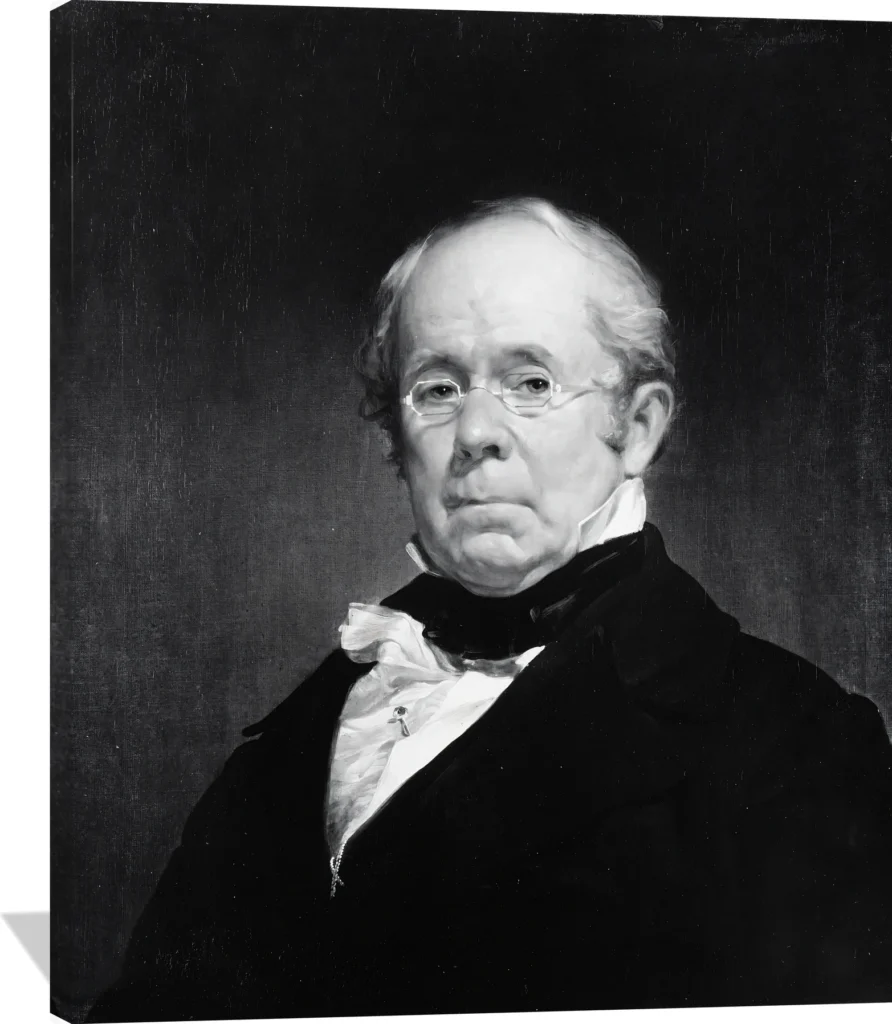
The Charles Loring Elliott Preston Hodges canvas captures the refined dignity of 19th-century portraiture with masterful realism. Subtle tones of charcoal, ivory, and muted brown create a timeless contrast, drawing focus to the sitter’s composed expression and elegant attire. Elliott’s meticulous brushwork and soft lighting evoke a sense of quiet intellect and presence.
This distinguished wall art brings a touch of classical sophistication to any interior. Perfect for a study, library, or formal living room, the Preston Hodges canvas print adds depth and historical charm to contemporary or traditional spaces alike.
Charles Loring Elliott (1812–1868) was one of the most admired American portraitists of the mid‑19th century, celebrated for his ability to capture both likeness and character with understated elegance.
Artistic Style
Elliott’s portraits are distinguished by their balanced realism, meticulous draftsmanship, and refined clarity. He favored sober compositions that placed emphasis on the sitter’s face, often set against restrained backgrounds that heightened emotional presence. His controlled palette and subtle modulations of light contributed to an atmosphere of calm introspection.
Subjects and Notable Contributions
Working during a period of expanding cultural identity in the United States, Elliott devoted his career almost exclusively to portraiture. He depicted leading figures of his era, from statesmen and writers to influential social personalities, helping define the visual record of America’s antebellum generation. His steady, perceptive approach positioned him among the most respected portrait painters of his time.
Cultural and Historical Significance
Elliott played a key role in shaping the American tradition of formal portraiture before the rise of photography. His work preserves a vivid cross‑section of mid‑19th‑century life, capturing the aspirations and character of a nation in transition. As a foundational figure in American portrait painting, he is remembered for elevating the genre with his exceptional sensitivity to human presence and his enduring contribution to the visual heritage of the United States.
Trust & policies
- 🚚 Free tracked shipping to 45+ countries. Local import duties or taxes may apply in some destinations.
- 🎨 Made-to-order, printed close to your delivery location
- 🛡️ If damaged, defective, or misprinted: free replacement or refund
- 🌍 Printed in US/CA/EU/UK/AU based on delivery location
- 💎 Acid-free, fade-resistant canvas with solid wood stretcher bars
- 🖼️ Optional pine floating frames in white, black, or brown
- 🪝 Ready to hang — hardware pre-installed