
The Sofa
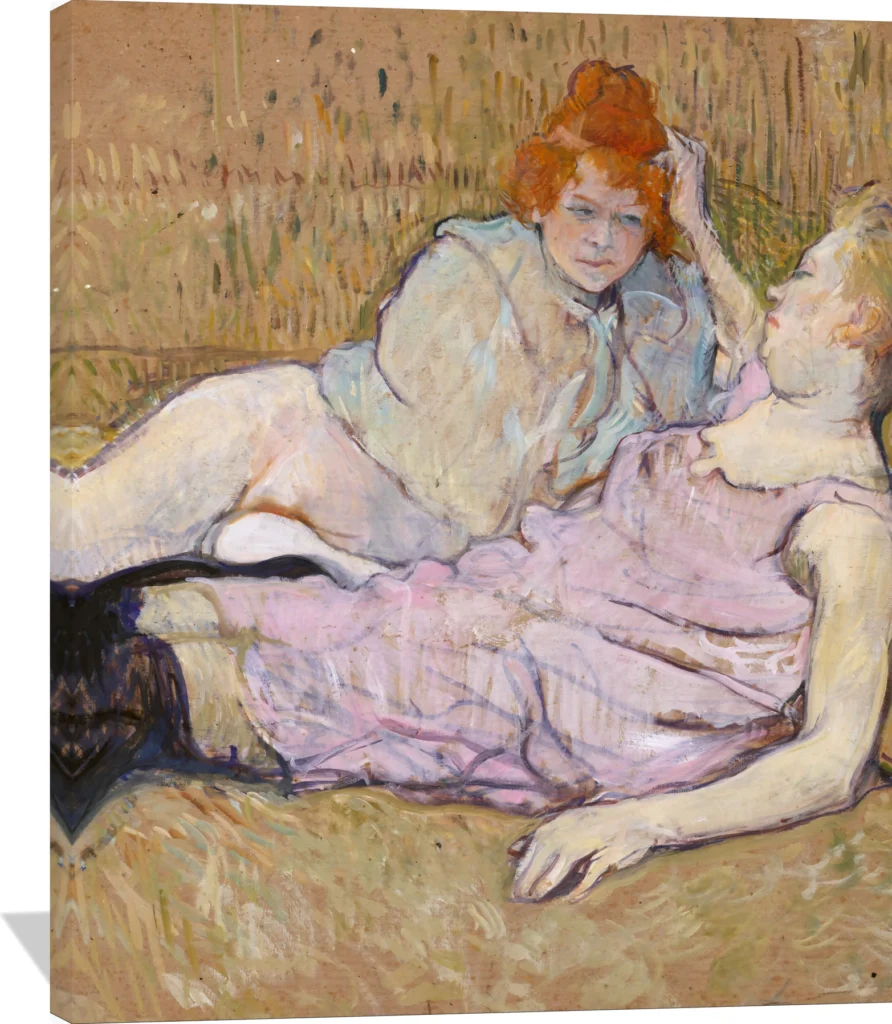
The Henri de Toulouse-Lautrec The Sofa canvas captures an intimate, relaxed moment between two women rendered in the artist’s signature expressive line and pastel palette. Soft tones of lilac, sage, ochre, and cream flow across the composition, evoking warmth and quiet conversation within a private interior. The horizontal orientation and painterly texture make this piece both inviting and sophisticated.
This Toulouse-Lautrec wall art brings a touch of Belle Époque elegance to any space. Ideal for a living room, study, or entryway, this canvas print adds a refined sense of intimacy and artistic heritage to your décor.
Henri de Toulouse-Lautrec (French, Albi 1864–1901 Saint-André-du-Bois) was a pioneering figure of late nineteenth‑century art whose vivid portrayals of Parisian nightlife became icons of modern visual culture. Living and working at the heart of Montmartre, he captured the cabarets, cafés-concerts, and performers who shaped the spirited world of the Belle Époque.
Artistic Style
Toulouse-Lautrec developed a distinctive graphic style marked by bold contours, unconventional cropping, and a masterful command of line. His work fused painterly sensitivity with innovative design, contributing significantly to the evolution of modern poster art. Through simplified forms and striking color contrasts, he conveyed movement, personality, and atmosphere with remarkable clarity.
Subjects and Themes
Drawn to the vibrancy and complexity of urban life, he portrayed dancers, singers, entertainers, and patrons of Montmartre’s bustling venues. Instead of romanticizing the scene, he offered intimate, empathetic observations, revealing both the glamour and the grit. Works such as his celebrated posters for venues like the Moulin Rouge transformed everyday performers into enduring cultural icons.
Cultural Significance
A master of lithography and a visionary of modern advertising, Toulouse-Lautrec played a crucial role in elevating the poster to a legitimate art form. His sharp eye for character and his innovative visual language left a lasting mark on modern illustration, graphic design, and popular culture. His legacy endures as that of a brilliant chronicler of Paris’s most dynamic era and a key figure in the development of modern visual art.
Trust & policies
- 🚚 Free tracked shipping to 45+ countries. Local import duties or taxes may apply in some destinations.
- 🎨 Made-to-order, printed close to your delivery location
- 🛡️ If damaged, defective, or misprinted: free replacement or refund
- 🌍 Printed in US/CA/EU/UK/AU based on delivery location
- 💎 Acid-free, fade-resistant canvas with solid wood stretcher bars
- 🖼️ Optional pine floating frames in white, black, or brown
- 🪝 Ready to hang — hardware pre-installed