
Lieven Willemsz van Coppenol (born about 1599, died 1671 or later)
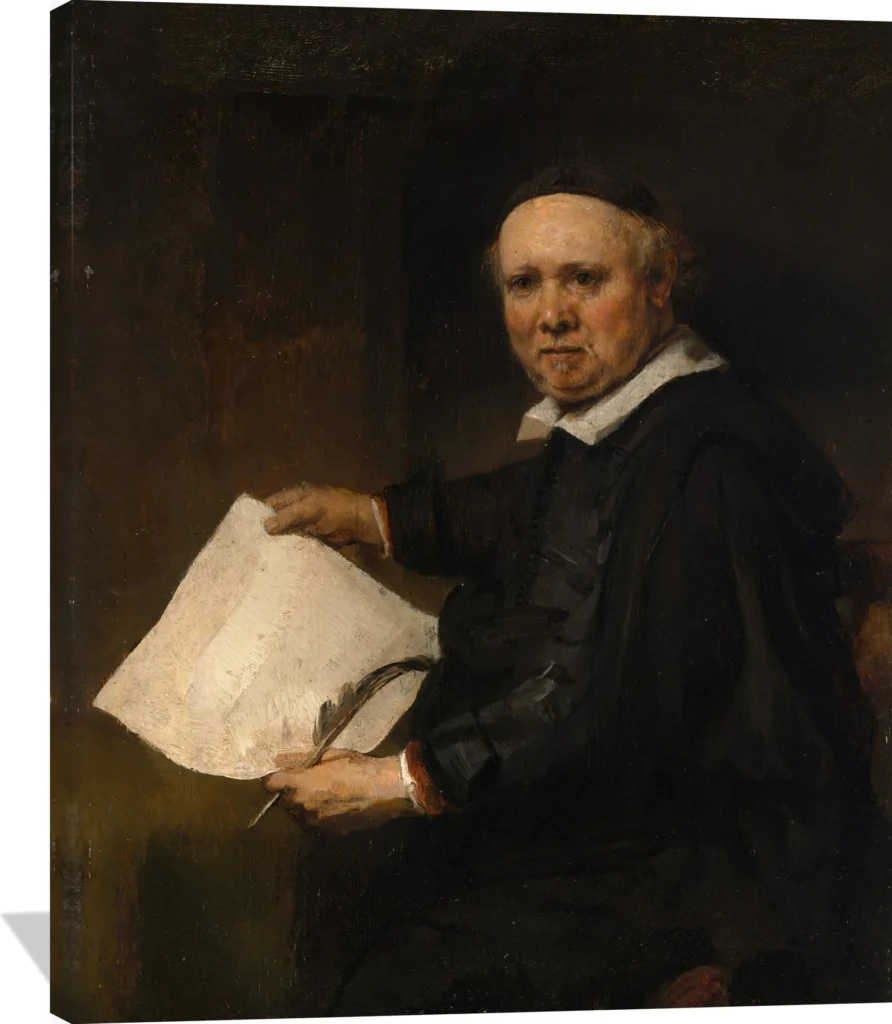
The Rembrandt Lieven Willemsz van Coppenol canvas captures the quiet dignity of a scholar immersed in thought. Rendered in warm browns, deep blacks, and soft golden tones, this masterful portrait glows with Rembrandt’s signature play of light and shadow. The sitter’s gentle expression and the subtle textures of paper and fabric create a timeless atmosphere of intellect and introspection.
This museum-quality wall art brings depth and refinement to any space—ideal for a study, library, or sophisticated living room. A canvas print of this celebrated Dutch masterpiece adds an enduring touch of history and artistry to your home décor.
Rembrandt van Rijn (1606–1669) was one of the most influential artists of the Dutch Golden Age, celebrated for his unparalleled mastery of light, shadow, and human emotion. Born in Leiden and later active in Amsterdam, he developed a profoundly expressive visual language that shaped the course of Western art.
Artistic Style
Rembrandt’s work is defined by his dramatic use of chiaroscuro, a technique that enhances depth and emotional intensity through the interplay of illumination and darkness. His brushwork ranged from finely detailed to boldly textured, revealing a deep interest in capturing the psychological presence of his subjects. This distinctive approach helped elevate everyday scenes and traditional narratives into powerful, introspective studies.
Subjects and Themes
Throughout his career, Rembrandt explored portraiture, historical and biblical narratives, and scenes from daily life. His self‑portraits, numbering more than any other major artist of his era, trace a lifetime of personal and artistic evolution. Works such as The Night Watch and The Jewish Bride demonstrate his gift for transforming complex group interactions and intimate relationships into compelling visual stories.
Legacy and Significance
Renowned for his keen observational skill and emotional depth, Rembrandt expanded the expressive potential of painting and printmaking. His etchings set new standards for the medium, while his paintings influenced generations of artists across Europe. Today, he remains a central figure in art history, admired for his ability to reveal the inner life of his subjects and for his innovative, deeply humanistic vision.
Rembrandt’s enduring appeal lies not only in his technical brilliance but also in his profound understanding of the human condition, making him one of history’s most revered and transformative painters.
Trust & policies
- 🚚 Free tracked shipping to 45+ countries. Local import duties or taxes may apply in some destinations.
- 🎨 Made-to-order, printed close to your delivery location
- 🛡️ If damaged, defective, or misprinted: free replacement or refund
- 🌍 Printed in US/CA/EU/UK/AU based on delivery location
- 💎 Acid-free, fade-resistant canvas with solid wood stretcher bars
- 🖼️ Optional pine floating frames in white, black, or brown
- 🪝 Ready to hang — hardware pre-installed