
Midshipman Augustus Brine
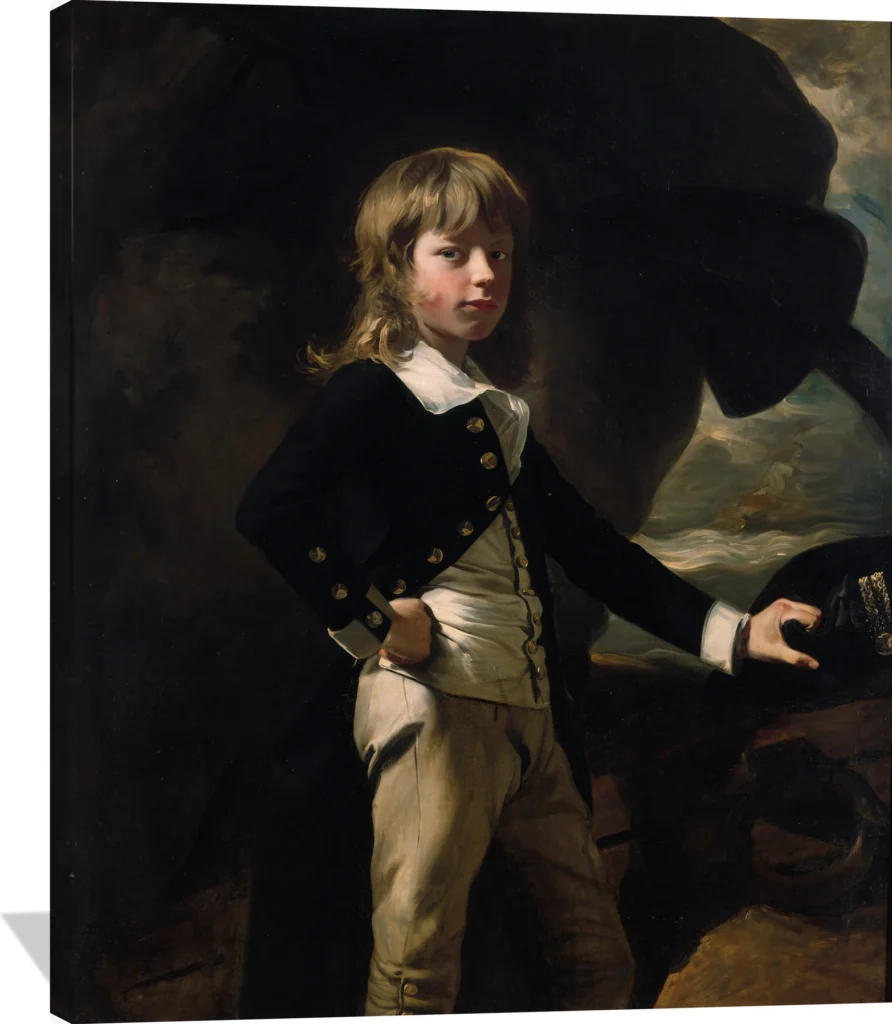
The John Singleton Copley Midshipman Augustus Brine canvas captures a striking portrait of youthful confidence and naval heritage. Rendered in rich tones of deep black, warm beige, ivory, and soft gold, this masterwork reflects Copley’s refined realism and dramatic use of light. The poised young midshipman stands against a moody maritime backdrop, evoking courage and grace.
This premium canvas print brings timeless sophistication to any setting—ideal for a study, library, or elegant living room. The Midshipman Augustus Brine wall art adds a sense of history and quiet strength to your décor, showcasing the enduring artistry of one of America’s most celebrated painters.
John Singleton Copley (1738–1815) was an American-born artist from Boston who later established his career in London. Renowned for his penetrating realism and meticulous technique, he became one of the most influential portraitists of the late eighteenth century.
Artistic Style and Technique
Copley’s work is distinguished by its finely rendered detail, lifelike textures, and direct psychological presence. His mastery of light and surface allowed him to capture fabrics, skin tones, and objects with exceptional clarity. This commitment to visual truth, combined with a refined sense of composition, positioned him as a leading figure in colonial American art before he transitioned to the European art world.
Notable Subjects and Themes
Copley excelled in portraiture, portraying merchants, political figures, and intellectuals with an unvarnished honesty that revealed both status and character. His ability to convey the individuality of his sitters made works such as Paul Revere iconic within American art. After moving to London, he expanded his repertoire to include dramatic historical scenes, where his precision and sense of narrative brought complex events vividly to life.
Cultural and Historical Significance
As one of the first American artists to achieve international recognition, Copley bridged the artistic worlds of colonial America and Enlightenment-era Britain. His portraits form an essential visual record of the emerging American identity, while his later European works demonstrate a sophisticated engagement with grand historical storytelling. Today, he is celebrated for his uncompromising realism and his role in shaping early American fine art.
Trust & policies
- 🚚 Free tracked shipping to 45+ countries. Local import duties or taxes may apply in some destinations.
- 🎨 Made-to-order, printed close to your delivery location
- 🛡️ If damaged, defective, or misprinted: free replacement or refund
- 🌍 Printed in US/CA/EU/UK/AU based on delivery location
- 💎 Acid-free, fade-resistant canvas with solid wood stretcher bars
- 🖼️ Optional pine floating frames in white, black, or brown
- 🪝 Ready to hang — hardware pre-installed